
3A Molecular Sieve Selection for Insulating Glass Units
: A Technical Guide
3A molecular sieve is the desiccant placed inside the spacer cavity of an insulating glass unit (IGU), where it adsorbs residual moisture and solvent vapour from the sealed air or gas space and reduces the risk of internal condensation and fogging. In the Soleron Insulating Glass Materials range it is a synthetic zeolite desiccant supplied in three particle size grades — 0.5–0.9 mm, 1.0–1.5 mm and 1.5–2.0 mm — brown in colour, vacuum-packed in cartons at a declared net weight of 25 kg per package, with a 5-year guarantee. This guide covers the parameters a processor or buyer should verify before releasing an order: grade versus cavity, declared net weight, packaging integrity, guarantee period, compatibility with the rest of the edge system, and acceptance testing.
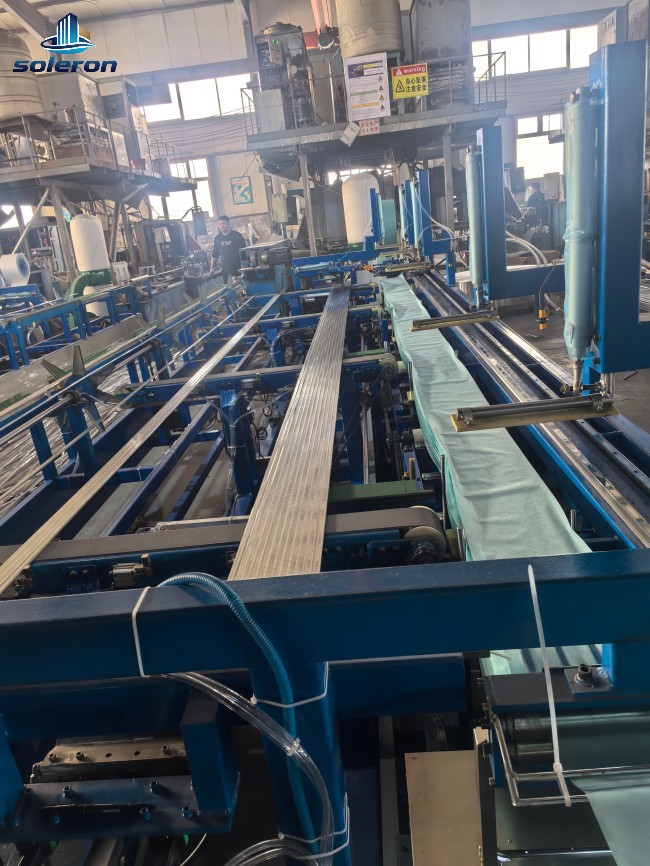
The problem the desiccant has to solve
An insulating glass unit consists of two or more glass panes separated by a spacer and sealed around the edges to form an insulating air or gas-filled cavity. The spacer bar holds the panes at a fixed distance from each other and thereby establishes the size of the interpane space — it is the component that defines the geometry the desiccant has to work inside.
That sealed cavity is not dry when it is closed. Residual water vapour and solvent vapour remain in the space after assembly, and they remain mobile. Commonly used desiccants in IGUs are molecular sieves, or blends of silica gel with molecular sieves, and their stated purpose is to adsorb residual water and solvent vapour in the sealed space in order to keep humidity low.
When that adsorption job is under-specified, the failure mode appears on the glass rather than in the paperwork. Moisture that is not taken up by the desiccant can condense on the inner glass surface when the unit's outer pane runs cold, which is what buyers describe as internal fogging or interior condensation. The same moisture load also works against the edge seal over time, and the edge seal is where IGU durability is decided.
This is the practical reason desiccant selection is a specification decision rather than a consumable line item. A 3A molecular sieve order is only as good as the four things declared on it: the grade, the quantity per package, the barrier packaging, and the period over which the supplier stands behind the material.
Industry background: why buyers now ask for declared parameters
The downstream market is large and still expanding. Grand View Research values the global insulated glass market at USD 92.7 billion in 2024, with a projected path to USD 121.7 billion by 2030. Within that market, Mordor Intelligence values the 3A grade molecular sieve segment at USD 1.80 billion in 2024 — a segment large enough that buyers can reasonably demand declared specifications instead of unlabelled bulk material.
The energy side of the market is moving in the same direction. Meticulous Research puts the warm edge spacer market at USD 1.1 billion in 2024, projected to reach around USD 1.90 billion by 2035. Warm edge and composite spacer systems, and triple-glazed constructions, change the cavity geometry that the desiccant must fill — which is exactly the variable that makes grade selection a per-project decision rather than a standing default.
Compliance regimes reinforce the same point. EN 1279-2 sets a moisture penetration test for insulating glass units with pass criteria of an average moisture penetration index Iav ≤ 0.20 across five aged specimens, with an individual specimen value ≤ 0.25. The same standard recognises several permitted methods for determining desiccant moisture content: 540 °C drying, Karl Fischer titration, gravimetric methods and dew-point methods. AS/NZS 4666:2012 address long-term type testing, periodic manufacturing testing, traceability, desiccant suitability, shelf life and desiccant exposure limits. In other words, the standards treat the desiccant as a controlled, traceable component — and a controlled component needs declared parameters on the purchase order.
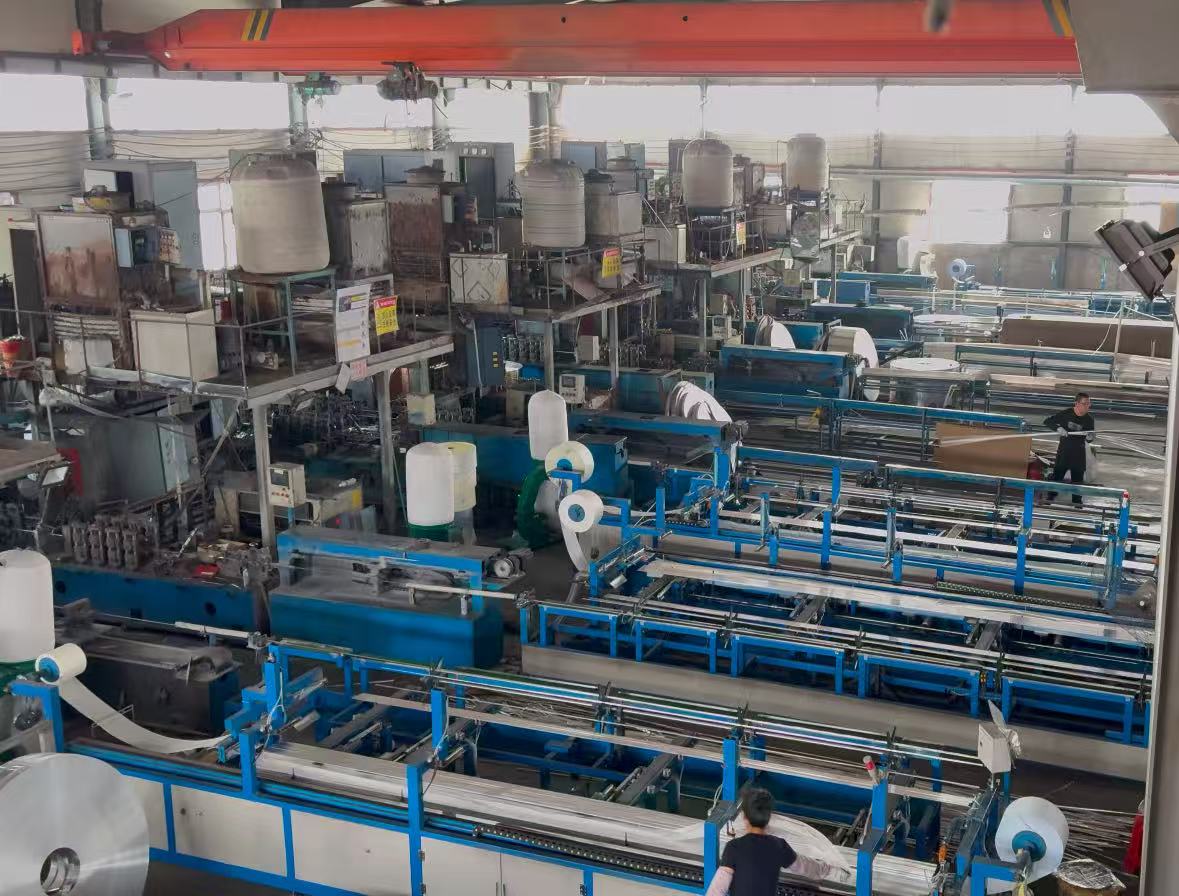
The declared parameters of Soleron 3A molecular sieve
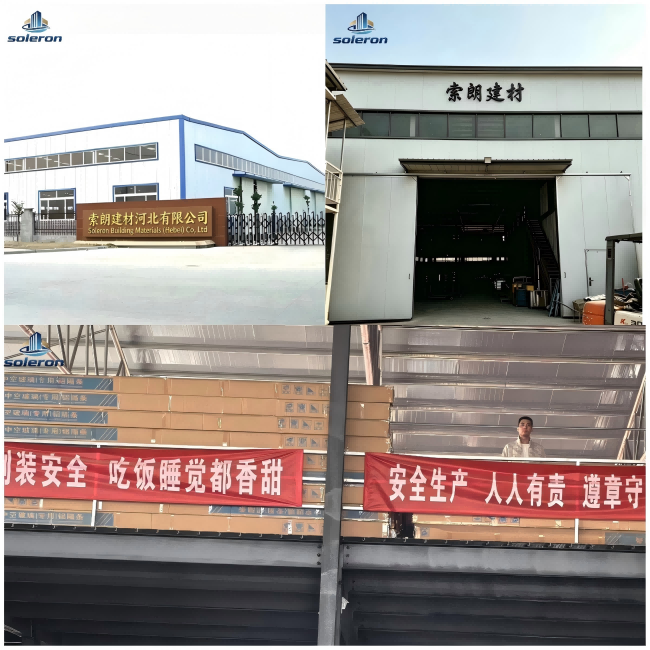
Soleron Insulating Glass Materials is the insulating glass materials line of Soleron Building Materials (Hebei) Co., Ltd., a manufacturer based in Renqiu, Hebei Province, China, supplying spacers, sealants, desiccants and related IGU components. Its 3A molecular sieve is declared with the following parameters, and these are the values that should appear on the specification sheet compared against a quotation.
| Parameter | Declared value | Why the buyer verifies it |
|---|---|---|
| Product | 3A Molecular Sieve | Confirms the pore type and the desiccant class actually quoted. |
| Material | Synthetic Zeolite | Establishes the base material behind the adsorption claim. |
| Particle size grades | 0.5–0.9 mm, 1.0–1.5 mm, 1.5–2.0 mm | Determines fit with cavity width and filling equipment. |
| Colour | Brown | Visual reference for incoming inspection and batch identification. |
| Packaging | Vacuum + carton box | Barrier protection against moisture pick-up in storage and transit. |
| Declared net weight | N.W. 25 kg per package | Basis for quantity calculation, dosing and price comparison. |
| Guarantee period | 5 years | Aligns desiccant warranty with the IGU warranty being offered. |
| Application | Insulating glass and window | Confirms intended end use rather than a general-purpose grade. |
Three of these need emphasis because they are the ones most often left vague in an enquiry. The first is the grade. “3A molecular sieve” on its own identifies the chemistry but not the particle size, and the particle size is what determines whether the material can be fed into a given spacer cavity at all. The second is the declared net weight. A 25 kg declared net weight is a purchase-quantity input and a dosing input at the same time; comparing quotations per carton without confirming net weight per carton compares nothing. The third is packaging. Vacuum plus carton is a moisture barrier, and a barrier that is compromised in transit has already allowed partial loading of the desiccant before it reaches the filling machine.
Step-by-step: seven checks before releasing a 3A molecular sieve order
Step 1 — Fix the cavity width from the spacer profile
Start from the spacer, not from the desiccant. The Soleron aluminium spacer bar range covers sizes of 5.5–50 mm with wall thickness of 0.16–0.35 mm, supplied in 5 m lengths or customised lengths, and the warm edge range covers 6–27A. The cavity inside that profile is the volume the desiccant has to occupy, and it is the constraint that rules grades in or out. Note the profile, the cavity and the fill opening before looking at a particle size.
Step 2 — Select the particle size grade against that cavity
The Soleron range offers three grades. 0.5–0.9 mm is the smallest grade in the range, and it is the grade to consider where the cavity is narrow and the fill path is restricted, so that a finer granule is needed to enter and pack the space. 1.0–1.5 mm is the middle grade, sitting between the fine and the coarse option. 1.5–2.0 mm is the coarsest grade in the range, used where the cavity and the fill ports comfortably accept a larger granule and where freer flow through bulk handling is an advantage.
Because the correct mapping depends on the specific spacer profile and on the filling machine rather than on the grade number alone, the grade should be confirmed against the profile drawing and, where possible, trialled on the production line before the bulk order is released.
Step 3 — Confirm declared net weight per package
Each package is declared at 25 kg net weight. Confirm that the figure quoted is net and not gross, because freight, pallet and carton weight sit on top and will distort a per-kilogram cost comparison. Confirm also that the net weight is stable batch to batch, since a change in fill weight quietly changes the desiccant-to-cavity ratio on the line.
Step 4 — Check the packaging barrier and inspect it on receipt
The declared packaging is vacuum plus carton box, with the carton acting as mechanical protection and the vacuum layer acting as the moisture barrier. Incoming inspection should look for loss of vacuum, damaged cartons and evidence of exposure before the material is issued to the filling station. A desiccant that has been sitting open in a humid warehouse is no longer the material that was specified, whatever the label says.
Step 5 — Align the guarantee period with the standard and with your warranty
Soleron declares a 5-year guarantee on the 3A molecular sieve. Set that period against two things: the shelf-life and desiccant exposure requirements your market's standard imposes — AS/NZS 4666:2012 explicitly covers shelf life and desiccant exposure limits — and the warranty you in turn give on the finished unit. A desiccant guarantee shorter than the IGU warranty leaves a gap that will be discussed at claim stage rather than at purchase stage.
Step 6 — Verify compatibility with the rest of the edge system
The desiccant does not work alone. It sits inside a spacer cavity bounded by a primary sealant and, in dual-seal construction, a secondary sealant. ASTM C1249-18 describes dual-seal units using polyisobutylene as the primary seal and silicone as the secondary seal as the construction with the required durability for structural silicone glazing. Where the edge system is being specified at the same time, single-source supply of the interacting components reduces the compatibility question: Soleron supplies aluminium spacer bars and warm edge spacers, butyl sealant, hot melt sealant and two-component silicone sealant under models SOL-803 and SOL-717, plus corner connectors in the 5.5–50 mm size range.
Step 7 — Agree acceptance criteria before shipment
For Soleron desiccant orders, the stated purchasing terms are a minimum order quantity of 5 cartons, delivery terms of EXW, FOB or CIF, a pre-shipment test as the acceptance criterion, and payment terms of 30/70. Where the project requires a moisture content figure, specify the test method up front — EN 1279-2 recognises 540 °C drying, Karl Fischer titration, gravimetric and dew-point methods — so that the certificate and the specification speak the same language.
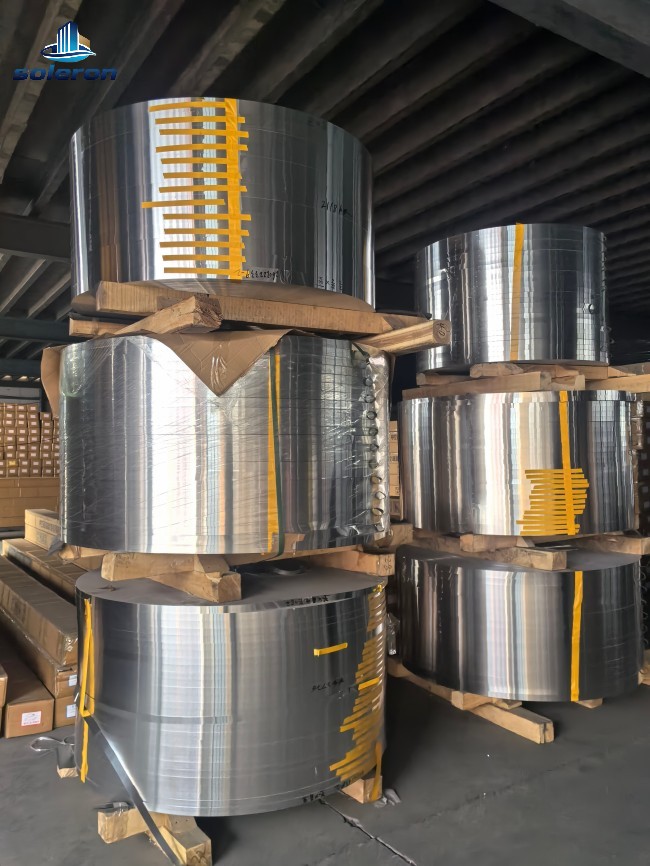
Grade comparison: 0.5–0.9 mm, 1.0–1.5 mm and 1.5–2.0 mm
| Grade | Position in the range | Cavity / spacer context | Handling consideration | Verify before ordering |
|---|---|---|---|---|
| 0.5–0.9 mm | Smallest grade | Narrow cavities and restricted fill paths, where a fine granule is needed to enter and pack the space | Finer material requires a controlled fill setting on the dosing equipment | That the filling machine and fill opening accept the fine grade without bridging |
| 1.0–1.5 mm | Middle grade | Intermediate cavities where neither the finest nor the coarsest granule is required | General-purpose handling across standard filling equipment | That the chosen profile has been trialled with this grade on your line |
| 1.5–2.0 mm | Coarsest grade | Wider cavities and fill ports that comfortably accept a larger granule | Freer flow in bulk handling and filling | That the cavity is wide enough for uniform packing with the coarse grade |
The three grades above are the declared Soleron particle size range. Mapping a grade to a specific spacer width is a processing decision that must be confirmed against the spacer profile drawing and the filling machine settings — it should not be assumed from the grade number alone, and it should be validated on the line before a bulk order.
Use cases
Double-glazed residential windows on aluminium spacer bars
Standard residential units built on aluminium spacer bar in the 5.5–50 mm size range form the highest-volume application. Here the desiccant requirement is stable and repeatable, and the priority is a consistent grade, a consistent 25 kg declared net weight and packaging that survives storage between production runs. Aluminium spacer bars are compatible with conventional insulating glass production lines, which helps maintain stable production when the desiccant supply is equally consistent.
Warm edge and composite spacer systems
Warm edge spacer profiles in the 6–27A range change the cavity geometry compared with conventional aluminium, and the desiccant grade has to be matched to that geometry rather than carried over by default. Because warm edge adoption is the energy-driven growth segment of the market, this is the configuration where a documented grade-to-profile decision is most valuable.
Triple glazing and high-performance units
Multi-cavity units multiply the number of desiccant-filled spaces per unit and therefore the quantity consumed per square metre of finished glass. For these projects the quantity calculation should be run from declared net weight per package rather than from carton count, so that consumption and reorder points stay accurate.
Commercial facades and structural glazing
Where the unit is part of a structural silicone glazing system, the dual-seal construction described in ASTM C1249-18 — polyisobutylene primary seal with silicone secondary seal — sets the context in which the desiccant is expected to perform. Specifying desiccant, spacer, primary sealant and secondary sealant together from one supplier keeps the compatibility question inside a single technical conversation.
Automatic IGU lines and high-volume processors
On automated lines, the desiccant is consumed through a molecular sieve filling machine, and grade selection has to be compatible with the filling equipment as well as the cavity. Soleron also supplies insulating glass processing machinery — production lines, glass washing machines, two-component sealant machines, butyl sealant extruders, spacer bar bending machines and molecular sieve filling machines — with power supply of 220V–380V, 50Hz and a power range of 3.2kW–38kW, so the grade decision and the equipment decision can be reviewed together.
Distributors and channel partners building a multi-component stock
For a distributor, the desiccant is one line inside a broader insulating glass materials basket. Soleron operates 10 automatic aluminium spacer bar production lines, 8 semi-automatic production lines and 10 warm edge spacer production lines, with annual production capacity reaching 500 tons, and keeps more than 100 pieces of regular aluminium spacer bars and warm-edge spacers in stock. For repeat buyers this matters less as a capability statement and more as a supply-continuity input: a partner consolidating spacer, sealant and desiccant purchases is exposed to any single line that cannot replenish on schedule.
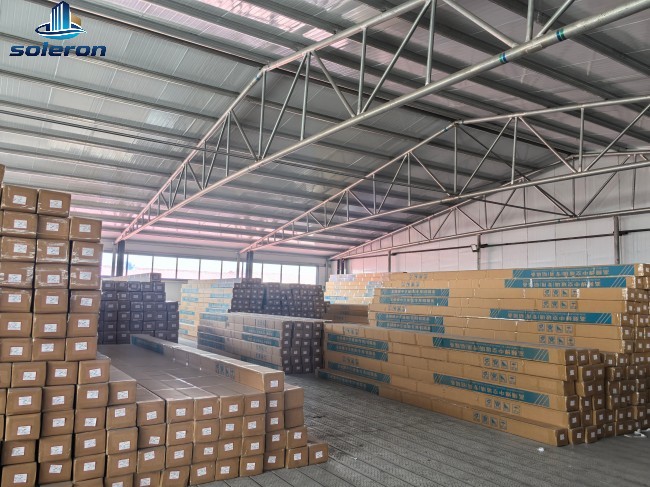
Frequently asked questions
Which standards apply when qualifying 3A molecular sieve in an insulating glass unit?
Two are directly relevant to desiccant qualification. EN 1279-2 sets a moisture penetration test for insulating glass units with pass criteria of an average moisture penetration index Iav ≤ 0.20 across five aged specimens and an individual specimen value ≤ 0.25, and it recognises 540 °C drying, Karl Fischer titration, gravimetric and dew-point methods for determining desiccant moisture content. AS/NZS 4666:2012 covers long-term type testing, periodic manufacturing testing, traceability, desiccant suitability, shelf life and desiccant exposure limits. A supplier qualification file should therefore contain a moisture content result produced by a named method, not only a general compliance statement.
How do I choose between the 0.5–0.9 mm, 1.0–1.5 mm and 1.5–2.0 mm grades?
Choose from the cavity outwards. 0.5–0.9 mm is the smallest grade in the Soleron range and is the option for narrow cavities and restricted fill paths where a fine granule must enter and pack the space. 1.0–1.5 mm is the middle grade for intermediate cavities. 1.5–2.0 mm is the coarsest grade, used where the cavity and fill ports comfortably accept a larger granule and freer flow through bulk handling helps. Because the correct mapping depends on the specific spacer profile and filling equipment, confirm the grade against the profile drawing and trial it on the line before a bulk order.
What quantity and commercial terms apply to a 3A molecular sieve order?
Each package is declared at 25 kg net weight, supplied vacuum-packed in a carton box. The minimum order quantity is 5 cartons, delivery terms are EXW, FOB or CIF, acceptance is by pre-shipment test, and payment terms are 30/70. No unit price is published here, because the cost drivers — particle size grade, grade mix across an order, packaging and the chosen delivery term — vary by enquiry, so a quotation should be requested per grade and per volume rather than compared on carton count alone.
Can I validate the material before committing to a bulk order?
Yes, and the purchasing terms support it: acceptance is defined as a pre-shipment test, so the validation step sits before dispatch rather than after arrival. Ask for the particle size grade and the declared net weight to be confirmed on the order, specify the moisture content test method where the project requires a figure, and inspect the vacuum barrier and carton on receipt. Trialling the grade on your own filling equipment is the most reliable way to confirm that a fine or coarse grade behaves as expected in your cavity.
How long is the guarantee, and can supply be sustained for repeat orders?
The 3A molecular sieve carries a 5-year guarantee. On continuity, Soleron Building Materials (Hebei) Co., Ltd. has more than 10 years of production experience and operates 10 automatic aluminium spacer bar production lines, 8 semi-automatic production lines and 10 warm edge spacer production lines, with annual production capacity reaching 500 tons and more than 100 pieces of regular aluminium spacer bars and warm-edge spacers held in stock. Products are supplied to markets including Europe, North America, Asia, the Middle East, Latin America and Africa. Buyers evaluating a long-term multi-component supplier can request the current specification sheet, the product catalogue and a quotation for the specific grade by contacting the sales team at soleron.buildingmaterials@gmail.com or +86 138-3340-3347.
Conclusion
Selecting 3A molecular sieve for an insulating glass unit comes down to a short list of verifiable parameters: the particle size grade matched to the spacer cavity, the declared net weight of 25 kg per package, the vacuum-plus-carton barrier, the brown synthetic zeolite base material, and the 5-year guarantee. Around those five sit the checks that decide whether the material performs as specified — compatibility with the primary and secondary sealants in the edge system, the acceptance test agreed before shipment, and the storage discipline that keeps the barrier intact until the filling station.
For Soleron Insulating Glass Materials, the practical offer is single-source supply of the components that interact: aluminium spacer bars from 5.5 mm to 50 mm, warm edge spacers from 6A to 27A, butyl and hot melt and two-component silicone sealants, corner connectors, and 3A molecular sieve in three grades. That reduces the number of compatibility conversations a processor has to run, and it puts the grade decision, the cavity decision and the sealant decision in front of the same technical contact.
Next step: specification sheet, catalogue and quotation
Confirm the grade, the declared net weight and the acceptance test for your cavity before the order is released. Download the full Soleron product catalogue here: Soleron product catalog (PDF).
Technical and commercial enquiries: James · Soleron Building Materials (Hebei) Co., Ltd. · soleron.buildingmaterials@gmail.com · +86 138-3340-3347 · WhatsApp. Address: Beizhangcun Industrial Zone, Renqiu City, Hebei Province, China.
Have Questions or Need More Details?
Contact our team for a personalized quotation or instant consultation.
Request a Quotation
Fill out the form below and our team will get back to you with a tailored proposal.
WhatsApp Direct Chat
Prefer to chat in real-time? Message us on WhatsApp for instant assistance & quick answers.
- Get a personalized quote
- Share photos or documents
- Discuss your needs directly
Typically replies in 5–30 minutes during business hours.