
IGU Processing Line Selection: Matching Machine Modules to Spacer, Sealant, and Desiccant Specs
An insulating glass processing line should be specified from the consumables outward, not from the machine inward. The spacer profile sets what the bending and filling modules must handle; the desiccant grade sets what the filling machine must meter; the sealant chemistry sets what the extruder and the two-component sealant machine must deliver. The Soleron SOL-2 line is a practical reference point here because its six modules are defined against exactly those inputs: glass washing, aluminium spacer bar bending, molecular sieve filling, butyl sealant extrusion, two-component sealant application, and the production line that sequences them.
Problem Definition: Where IGU Line Specifications Actually Break Down
Most line-selection errors do not show up on the purchase order. They show up three weeks into production, when a bending machine is asked to form a spacer profile outside its working range, or when a filling machine is loaded with a desiccant grade that will not flow evenly into the cavity it is meant to dry.
The functional logic is simple enough. A spacer bar holds the glass panes at a fixed distance and establishes the size of the interpane space, as described in technical literature from Lawrence Berkeley National Laboratory. The desiccant then adsorbs residual water and solvent vapour inside that sealed space, a function documented in ASTM C1249-18. The sealant system closes the edge. Every one of those three component decisions has a machine consequence.
The failures cluster in four places:
- Profile and wall thickness versus forming. An aluminium spacer bar is supplied in a defined size range and wall thickness. A bending module specified for one band of profiles is not automatically suitable for the full range.
- Desiccant grade versus cavity width. Desiccant is supplied in particle size grades, and the grade has to suit the spacer it is filled into.
- Sealant form versus application module. Butyl sealant, hot melt sealant and two-component silicone sealant are different materials handled by different modules. Treating "sealant" as one line item is where compatibility reviews stall.
- Primary versus secondary seal. For structural silicone glazing, ASTM C1249-18 describes only IG units with a dual-seal system — polyisobutylene as the primary seal and silicone as the secondary seal — as having the durability required for the application. A line that cannot apply both seals in a controlled way limits which projects a fabricator can quote.
The practical conclusion: lock the consumable specification first, then confirm the module set. Everything below follows that order.
Industry Background: Why Component Specification Is Tightening
Demand context matters because it explains why buyers are being pushed toward tighter component specification rather than looser. Grand View Research values the global insulated glass market at USD 92.7 billion in 2024, with a projected path to USD 101.3 billion in 2026 and USD 121.7 billion by 2030. On the component side, Meticulous Research values the warm edge spacer market at USD 1.1 billion in 2024, with a projected reach of around USD 1.90 billion by 2035.
Two forces sit behind that. The first is the shift in mix toward warm edge profiles, which changes the frame-forming and filling requirements on the line. Comparison data for the two spacer families cites typical thermal conductivity of 160–200 W/m·K for aluminium against 0.13–0.25 W/m·K for warm edge, with warm edge technology reported to reduce thermal bridging by up to 90% relative to aluminium. The second is qualification pressure from standards:
- EN 1279-2 sets a moisture penetration test regime with pass criteria of an average index Iav ≤ 0.20 across five aged specimens and an individual specimen index I ≤ 0.25. The same standard recognises several methods for determining desiccant moisture content, including 540 °C drying, Karl Fischer titration, gravimetric and dew-point methods.
- AS/NZS 4666:2012 covers long-term type testing, periodic manufacturing testing, traceability, desiccant suitability, shelf life and desiccant exposure limits for insulating glass units.
- ASTM C1249-18 describes the dual-seal composition used in structural silicone glazing systems.
None of these standards tell a buyer which machine to order. They do explain why a fabricator can no longer treat spacer, desiccant and sealant as interchangeable line items — and therefore why the processing line has to be configured around a fixed consumable specification.
Detailed Solution: The SOL-2 Module Architecture
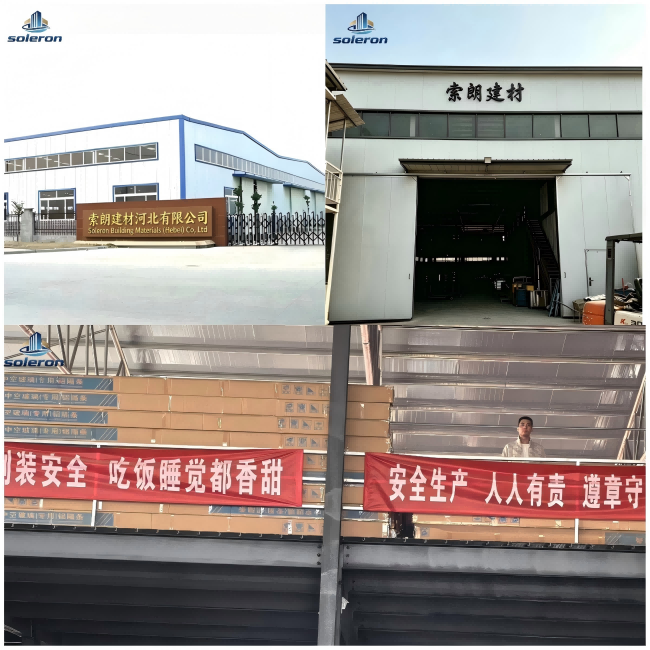
Soleron Building Materials (Hebei) Co., Ltd is a building materials manufacturer based in Renqiu, Hebei Province, China, supplying aluminium spacer bars, warm edge spacers, sealants, 3A molecular sieve desiccant, corner connectors and IGU processing equipment, and offering a one-stop procurement service for insulating glass components, hardware and auxiliary materials.
Its insulating glass processing machine, model SOL-2, is supplied as a line rather than as separate stand-alone machines. The line comprises an insulating glass production line, a glass washing machine, a two-component sealant machine, a butyl sealant extruder machine, an aluminium spacer bar bending machine and a molecular sieve filling machine. The declared power supply is 220V–380V, 50Hz, with a power range of 3.2kW–38kW, and the construction materials are carbon steel and stainless steel. The equipment is intended for the insulated glass industry and for insulating glass unit (IGU) processing.
Module 1 — Glass washing machine
The line includes a glass washing machine module in its structural configuration. Its job is to deliver clean glass to the assembly stage. It does not remove moisture from inside the cavity — that is the desiccant's role. Reading the two modules together is the point: washing performance and desiccant capacity are a pair, and a buyer who upgrades one without reviewing the other is solving half a problem.
Module 2 — Aluminium spacer bar bending machine
The aluminium spacer bar bending machine forms aluminium spacer frames for insulating glass. This is the first module where the spacer specification becomes binding. Soleron supplies aluminium spacer bar under model 5.5-50A in sizes from 5.5–50mm, with wall thickness of 0.16–0.35mm, in 5m standard lengths or custom lengths, produced from aluminium coil in 3003 and 1100 series. Air gap options run from 6A to 24A, with custom specifications available. Product types are standard, bendable, black, embossed and butyl aluminium spacer bars.
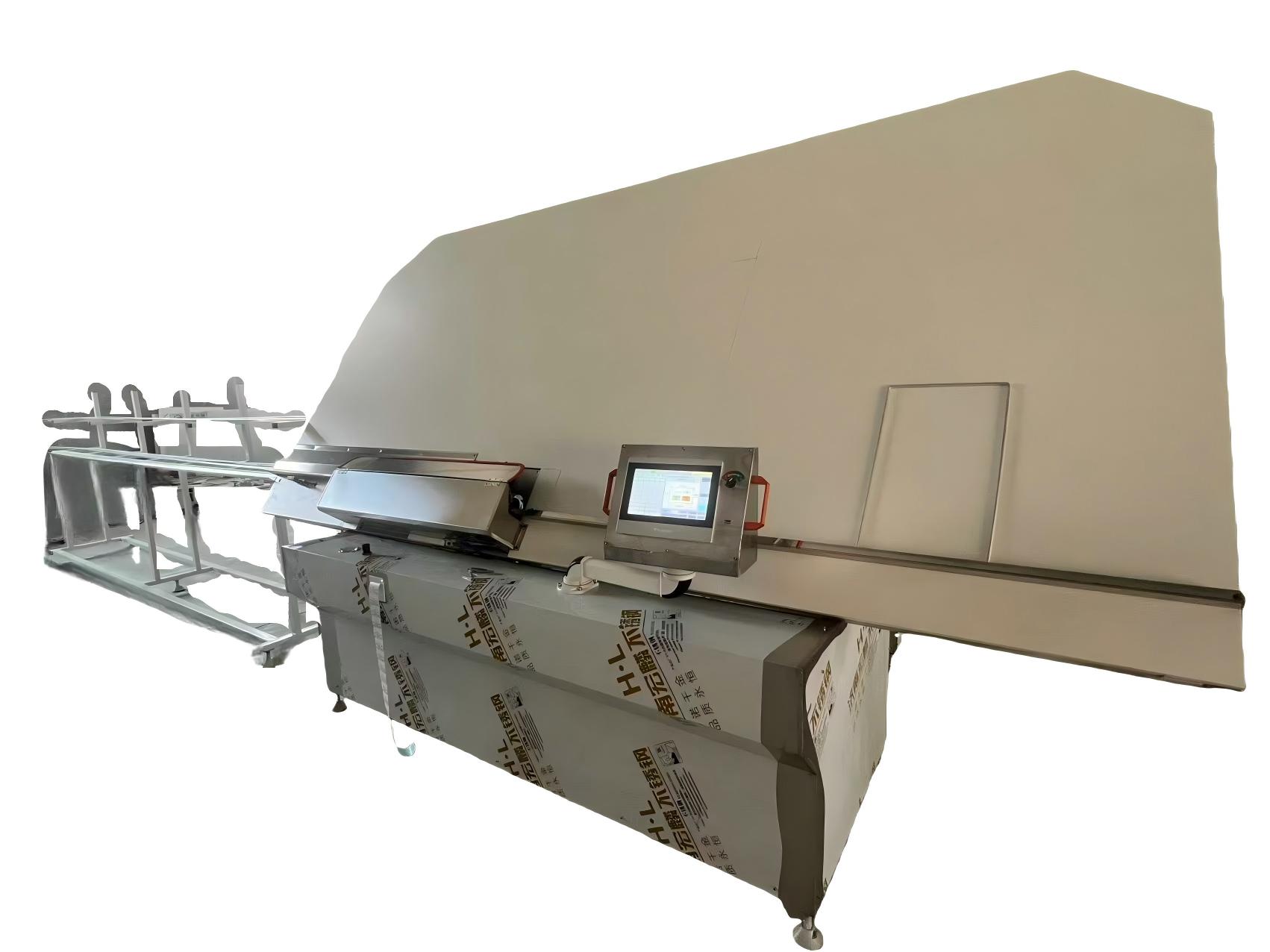
Two specification questions follow directly. First, whether the profile range the fabricator actually runs sits inside 5.5–50mm and inside the 6A–24A air gap band, or whether a custom specification is needed. Second, whether the fabricator intends to apply butyl in-line or to buy pre-coated butyl spacer bar — because the line also includes a dedicated butyl sealant extruder, and buying pre-coated stock changes what that extruder is used for.
Module 3 — Molecular sieve filling machine
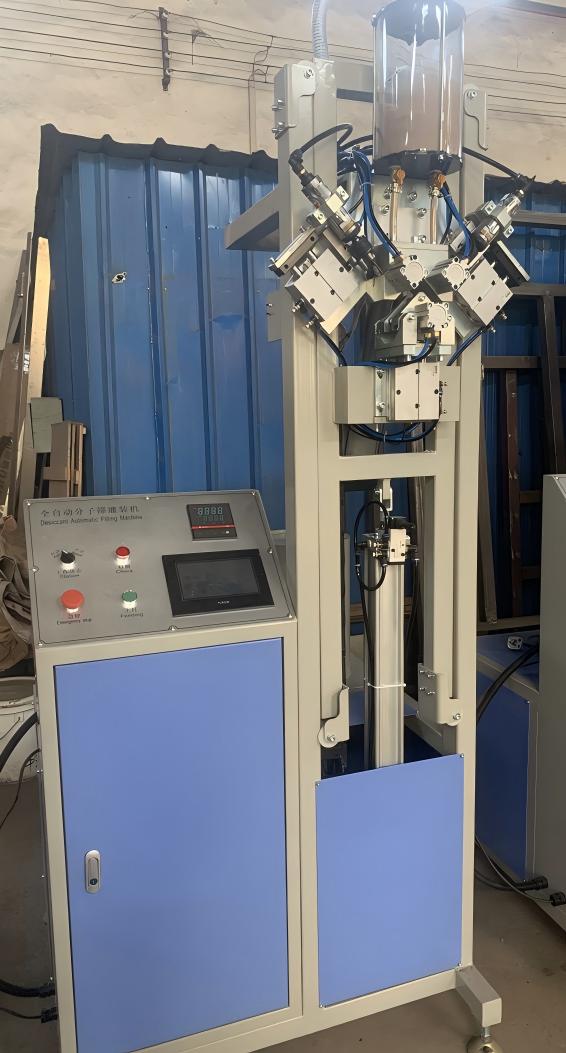
The molecular sieve filling machine fills desiccant into aluminium spacer bars. The consumable it handles is a 3A molecular sieve made from synthetic zeolite and classified as a molecular sieve desiccant. It absorbs residual moisture from the sealed cavity of insulating glass units and is intended to reduce internal condensation and fogging.
The product is offered in three particle size grades — 0.5–0.9mm, 1.0–1.5mm and 1.5–2.0mm — intended for different spacer widths. Colour is brown, packaging is vacuum plus carton box at 25kg net weight, and the declared quality guarantee is 5 years. Choosing the grade is therefore a function of the spacer cavity the fabricator runs narrowest, not a function of the machine's capability alone.
Module 4 — Butyl sealant extruder
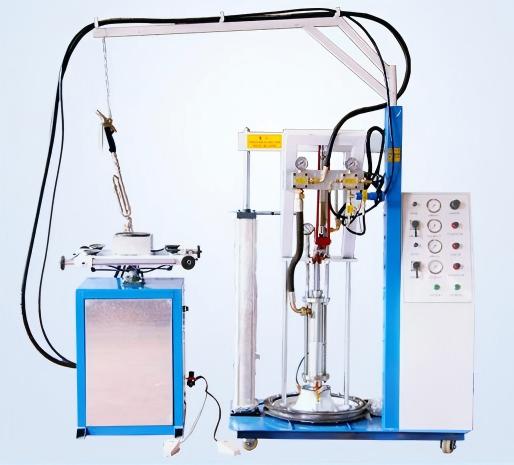
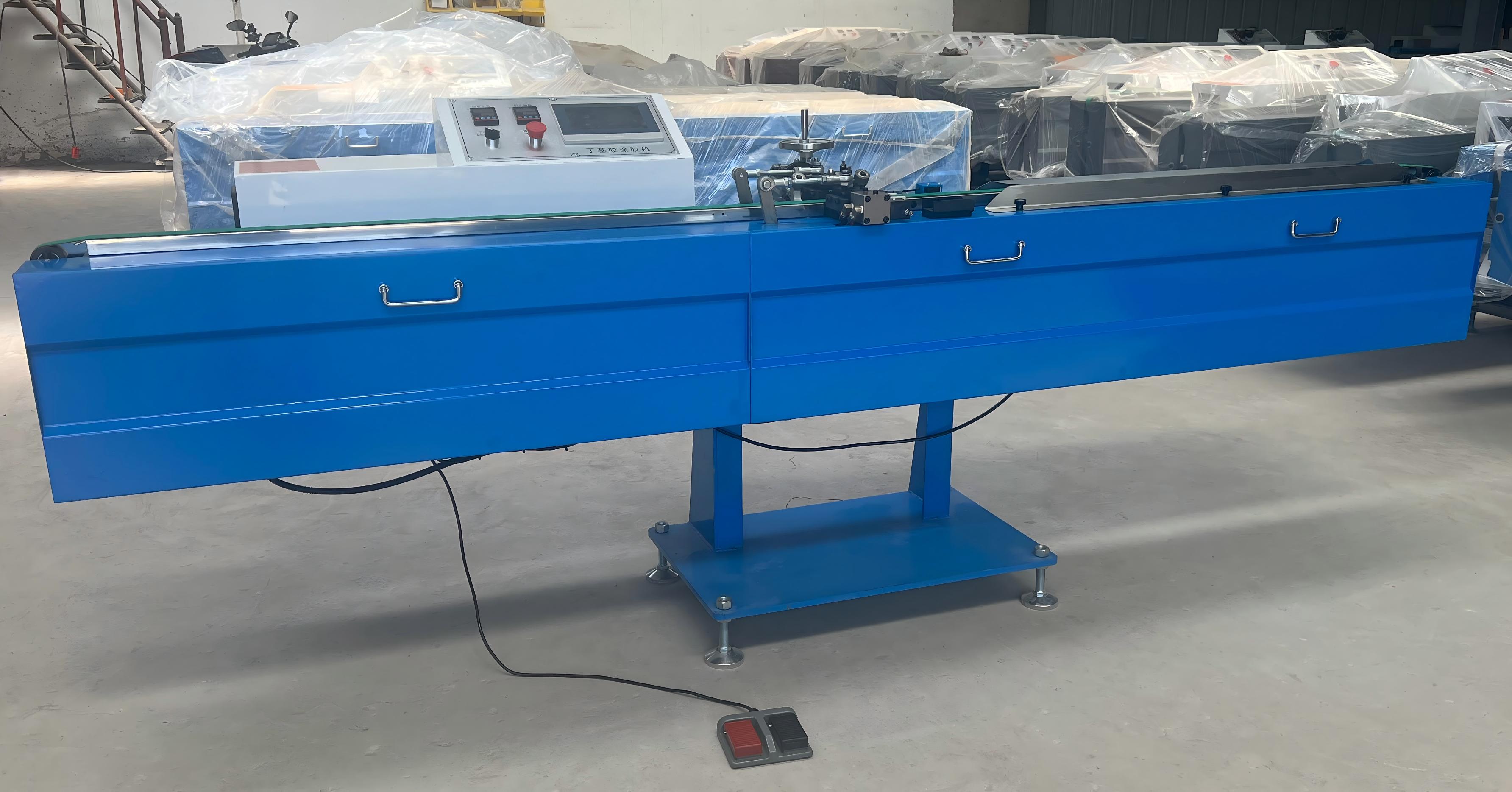
The butyl sealant extruder machine applies butyl sealant to spacer bars, forming the primary seal. The matching consumable is Soleron sealant in its butyl form, supplied under model designations SOL-717 and SOL-803 and made from butyl rubber, silicone polymer and EVA. Sealant is available in butyl, hot melt and two-component silicone grades, in black and white, packed in carton boxes, plastic drums or iron buckets at weights such as 28kg, 30kg and 330kg, with a declared quality guarantee of 10 years.
Module 5 — Two-component sealant machine
The two-component sealant machine applies primary and secondary sealant in insulating glass assembly. This is the module that determines whether a fabricator can serve dual-seal specifications, which is the composition ASTM C1249-18 describes for structural silicone glazing durability. Buyers should confirm which sealant forms the two-component unit is set up for — butyl, hot melt or two-component silicone — and whether the drum and bucket packaging sizes on offer (28kg, 30kg, 330kg) match the machine's supply arrangement.
Module 6 — The production line itself
The line-level module is what turns six functions into a production sequence. Soleron states reliable operation for continuous production, suitability for high-volume IGU manufacturing, a user-friendly control system, and stable performance across different IGU sizes and configurations. It also states that machine configurations can be tailored to customer needs, which matters because a fabricator running only warm edge profiles would be specifying a different module mix from one running standard aluminium.
Matching Each Module to the Consumable It Must Handle
| SOL-2 module | Function in IGU assembly | Consumable specification it must match |
|---|---|---|
| Glass washing machine | Delivers clean glass to assembly | Clean, dry glass; residual cavity moisture is then handled by the desiccant |
| Aluminium spacer bar bending machine | Forms aluminium spacer frames | Aluminium spacer bar 5.5–50mm, 0.16–0.35mm wall, 3003/1100 alloy, 6A–24A air gap |
| Molecular sieve filling machine | Fills desiccant into aluminium spacer bars | 3A molecular sieve, 0.5–0.9mm / 1.0–1.5mm / 1.5–2.0mm, selected by spacer width |
| Butyl sealant extruder | Applies butyl sealant to spacer bars | Butyl sealant or hot melt sealant, SOL-717 / SOL-803, 28kg–330kg packaging |
| Two-component sealant machine | Applies primary and secondary sealant | Two-component silicone sealant; dual-seal build-up where the project requires it |
| Insulating glass production line | Sequences the modules into one production flow | 220V–380V, 50Hz, 3.2kW–38kW; carbon steel and stainless steel construction |
Aluminium versus warm edge: two different module burdens
Warm edge spacers are supplied under model 6-27A, covering sizes 6–27A in 5m standard or custom lengths, made from fiberglass, stainless steel or PP. Product types include fiberglass warm edge spacer bar, composite warm edge spacer (plastic plus stainless steel) and PP warm edge spacer, with flexible warm edge spacer and butyl sealing spacer variants in the range. The declared quality guarantee is also 5 years.
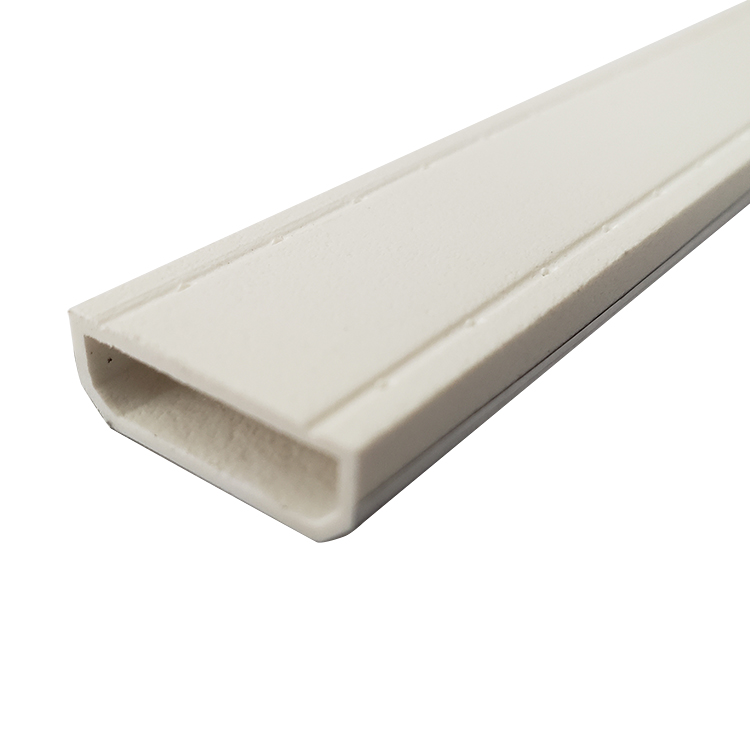
The module consequence is straightforward: aluminium spacer bars are formed on the bending module and filled on the desiccant filling module, while warm edge systems are commonly supplied as flexible or pre-coated profiles. A buyer planning to run both families needs to confirm the line configuration covers both, rather than assuming the aluminium bending module doubles as a warm edge line.
Sealant form: the parameter most often left open
Sealant is where purchase orders most often stay vague. Three forms are supplied — butyl sealant, hot melt sealant and two-component silicone sealant — and each implies a different machine set-up and a different storage and handling routine. Because the guarantee period on sealant (10 years) is longer than on the spacers and desiccant (5 years each), it is worth fixing the sealant form before the module list is signed, not after.
Frame hardware that must match the same profile range
Corner connectors are supplied under model 5.5-50mm in recyclable plastics, covering plastic corner connectors, steel straight connectors, Georgian bar connectors and end caps, in black, white and custom colours, packed in bags or boxes. The size designation aligns with the aluminium spacer bar range, which is the practical reason to confirm connector availability at the same time as the profile — a frame that assembles cleanly matters as much as a frame that bends cleanly.
Step-by-Step Breakdown: Specifying a Line in the Right Order
- Fix the IGU build-up and cavity width. Decide whether the production mix runs aluminium cavities in the 6A–24A band or warm edge cavities in the 6–27A band, and whether both are needed. This single decision drives the bending and filling module review.
- Choose the spacer profile and wall thickness. For aluminium, confirm the size within 5.5–50mm, the wall thickness within 0.16–0.35mm, and the alloy (3003 or 1100 series). For warm edge, confirm whether fiberglass, composite or PP construction is required.
- Select the desiccant grade by spacer width. Match the 3A molecular sieve grade — 0.5–0.9mm, 1.0–1.5mm or 1.5–2.0mm — to the narrowest cavity in the production plan, and confirm filling module compatibility at that grade.
- Define the sealant system. Decide the primary seal (butyl or hot melt) and the secondary seal (two-component silicone), and confirm whether dual-seal build-ups are required for the projects being quoted.
- Specify the module set, power and construction. Confirm which of the six modules are needed, the power supply (220V–380V, 50Hz) and power range (3.2kW–38kW), and whether carbon steel or stainless steel construction is required for the plant environment.
- Confirm supply terms and run a validation build. Verify guarantee periods, packaging formats (25kg vacuum cartons for desiccant; 28kg, 30kg or 330kg sealant containers; carton boxes for accessories), and request samples for a trial run before committing to the full line.
Specification checklist before ordering: cavity width range confirmed · spacer size and wall thickness confirmed · alloy or warm edge construction confirmed · desiccant grade matched to narrowest cavity · primary and secondary sealant forms fixed · module list mapped to each consumable · power supply and power range confirmed · construction material confirmed · packaging and guarantee terms in writing.
Use Cases: Where Module-to-Consumable Matching Pays Off
The application scope for these materials and the line covers residential, commercial, hotel, office building, curtain wall, windows and doors, industrial, public building, renovation and energy-efficient building projects. The operating modes involved are adsorption, sealing and gas filling, alongside passive performance, under clean, dry, temperature-controlled and humidity-controlled production conditions.
- Curtain wall and commercial facade work. These projects are the ones most likely to specify dual-seal construction, so the two-component sealant machine and the secondary sealant choice carry the specification risk rather than the spacer.
- Standard window fabrication at volume. Repeat aluminium profile sizes in the 6A–24A band reward a fixed desiccant grade and a stable bending set-up; the gain is throughput consistency rather than flexibility.
- Energy-efficient building programmes. Warm edge profiles in the 6–27A range shift the requirement from aluminium forming to flexible or composite profile handling, and the desiccant grade has to be re-checked against the new cavity widths.
- Renovation and mixed-order workshops. Where both aluminium and warm edge units are produced, the module list and the consumable stock list have to be reviewed together — this is exactly the case where a tailored configuration is worth requesting.
Comparison Table: Aluminium and Warm Edge Spacer Specifications
| Selection parameter | Aluminium spacer bar (model 5.5-50A) | Warm edge spacer bar (model 6-27A) |
|---|---|---|
| Size / air gap range | 5.5–50mm profile; 6A–24A and custom specifications | 6–27A, custom sizes available |
| Wall thickness | 0.16–0.35mm | Not stated in the published product data |
| Base material | Aluminium coil, 3003 and 1100 series | Fiberglass, stainless steel, PP |
| Product types | Standard, bendable, black, embossed, butyl aluminium spacer bar | Fiberglass, composite (plastic + stainless steel), PP; flexible and butyl sealing variants |
| Standard length | 5m, custom lengths available | 5m, custom lengths available |
| Quality guarantee | 5 years | 5 years |
| Reported thermal conductivity | 160–200 W/m·K | 0.13–0.25 W/m·K |
Thermal conductivity figures come from third-party comparison data on aluminium and warm edge spacer families, not from Soleron product testing. Buyers should obtain current supplier datasheets before finalising an energy performance claim.
FAQ
How do I match an IGU processing line to my spacer specification?
Start from the spacer, then work outward. The aluminium spacer bar bending machine forms aluminium spacer frames, so the spacer size (5.5–50mm), wall thickness (0.16–0.35mm), alloy (3003 or 1100 series) and air gap (6A–24A) must all sit inside what the bending module handles. The molecular sieve filling machine then fills desiccant into those bars, so the desiccant grade has to match the cavity width. If warm edge profiles in the 6–27A range are also part of the plan, confirm that configuration explicitly rather than assuming the aluminium modules cover it.
Which 3A molecular sieve grade should I order for a given spacer width?
Soleron supplies 3A molecular sieve in three particle size grades — 0.5–0.9mm, 1.0–1.5mm and 1.5–2.0mm — intended for different spacer widths. The grade is selected against the spacer cavity being filled, so the practical approach is to identify the narrowest cavity in the production plan and confirm the filling performance at that grade. The product is synthetic zeolite, brown in colour, packed vacuum plus carton box at 25kg net weight, with a declared 5-year quality guarantee.
Can one supplier cover both the processing line and the consumables?
In this case yes, within the listed range. Soleron Building Materials (Hebei) Co., Ltd supplies the SOL-2 insulating glass processing line alongside aluminium spacer bars (model 5.5-50A), warm edge spacer bars (model 6-27A), sealant (models SOL-717 and SOL-803), 3A molecular sieve, corner connectors (model 5.5-50mm), Georgian bars and insulating glass accessories (model SOL-1), and offers a one-stop procurement service for insulating glass components, hardware and auxiliary materials. That matters for module matching, because a single source can confirm the consumable and the machine against each other rather than leaving the interface to the buyer.
What should a buyer verify before ordering insulating glass materials from a China supplier?
Verify the specification against the product data rather than the category name: size and wall thickness for spacer bars, particle size grade for desiccant, and sealant form (butyl, hot melt or two-component silicone) rather than "sealant" as a generic term. Confirm the guarantee periods actually offered — 5 years is declared for aluminium and warm edge spacer bars and for 3A molecular sieve, and 10 years for sealant. Confirm packaging formats fit your handling: vacuum cartons at 25kg for desiccant, carton boxes, plastic drums or iron buckets at 28kg, 30kg and 330kg for sealant. Then ask how the materials are checked against the standards relevant to your market, such as the EN 1279-2 moisture penetration criteria or the AS/NZS 4666 requirements on traceability and desiccant suitability.
How can I get samples or a quotation for the line and the consumables?
The most reliable route is to send the intended IGU build-up — cavity widths, spacer type, desiccant grade and sealant system — and ask for a matched recommendation covering both the module configuration and the consumable specification. Soleron can be reached at soleron.buildingmaterials@gmail.com or on +86 138-3340-3347 (also WhatsApp), and the full product catalogue is available for download as a PDF. Requesting a sample of the specific spacer profile and desiccant grade before committing to a full line order is the simplest way to de-risk the specification.
Conclusion
A processing line is a set of interfaces, not a set of machines. The aluminium spacer bar bending machine is only correct if the 5.5–50mm profile range and the 0.16–0.35mm wall thickness it must form are settled. The molecular sieve filling machine is only correct if the 0.5–0.9mm, 1.0–1.5mm or 1.5–2.0mm desiccant grade matches the spacer widths in production. The butyl extruder and the two-component sealant machine are only correct if the sealant form — butyl, hot melt or two-component silicone — is decided before the order.
The parameters to lock down before ordering are short and unglamorous: spacer size and wall thickness, cavity width, desiccant grade, sealant form and primary/secondary seal arrangement, then the machine-side parameters — power range 3.2kW–38kW on a 220V–380V, 50Hz supply, carbon steel or stainless steel construction, and the module set itself. Get those six right and the line will run continuous, high-volume production without re-specification. Get them wrong and no amount of throughput capability will fix the interface.
Next Step: Match Your Consumable Spec to the Right Module Set
Send your IGU build-up — cavity widths, spacer family, desiccant grade and sealant system — and we will map it against the SOL-2 module configuration, confirm availability of the matching spacer bars, sealant and desiccant, and arrange samples for a validation run.
- Email: soleron.buildingmaterials@gmail.com
- Tel / WhatsApp: +86 138-3340-3347
- Product catalogue (PDF): download the Soleron catalogue
- Website: iguglassunit.com
Soleron Building Materials (Hebei) Co., Ltd — Beizhangcun Industrial Zone, Renqiu City, Hebei Province, China.
Have Questions or Need More Details?
Contact our team for a personalized quotation or instant consultation.
Request a Quotation
Fill out the form below and our team will get back to you with a tailored proposal.
WhatsApp Direct Chat
Prefer to chat in real-time? Message us on WhatsApp for instant assistance & quick answers.
- Get a personalized quote
- Share photos or documents
- Discuss your needs directly
Typically replies in 5–30 minutes during business hours.