
Primary vs Secondary Seal in an Insulating Glass Unit
An insulating glass unit (IGU) is sealed at its edge in two separate layers, and the difference between them is functional rather than cosmetic. The primary seal is the inner layer next to the spacer, on the cavity side, and it works mainly as a barrier against water vapour reaching the desiccant and the sealed air or gas space. The secondary seal is the outer layer behind it, and it forms the structural bond that holds the glass panes and the spacer frame together. Both layers belong to one edge assembly, but they use different materials, are applied at different stations, and fail in different ways.
An IGU consists of two or more glass panes separated by a spacer and sealed around the edges to form an insulating air or gas-filled cavity. That definition is simple; the edge is not. This explainer sets out what each of the two seals does, why a single sealant layer cannot do both jobs, and where the sealant types named in the Soleron Insulating Glass Materials range — butyl sealant, hot melt sealant and two-component silicone sealant — sit inside that structure. It does not rank them, because the three are not interchangeable products competing for one position.
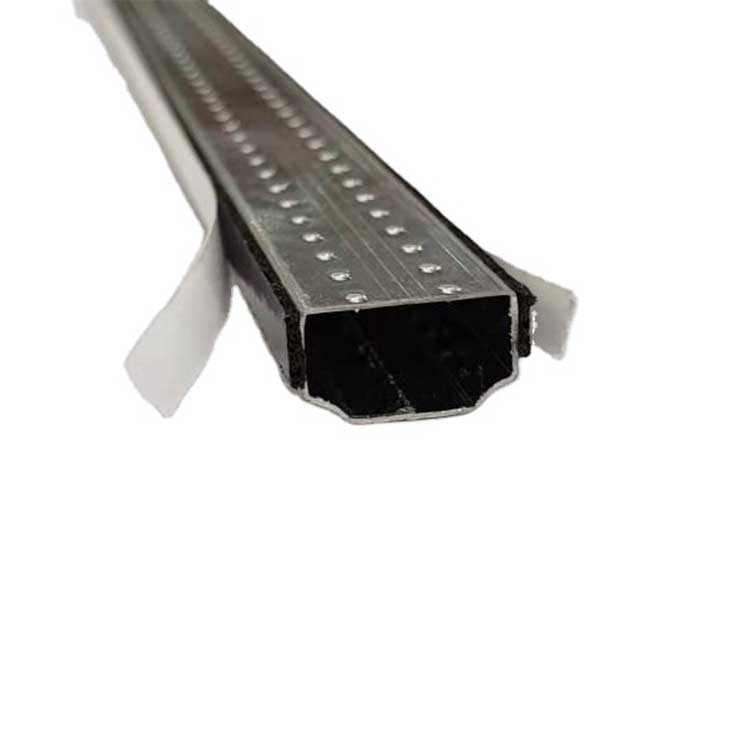
The edge assembly in one paragraph
A spacer bar holds the glass panes at a fixed distance from each other and so establishes the size of the interpane space (Lawrence Berkeley National Laboratory, Window Spacers and Edge Seals in Insulating Glass Units, 2025). Inside that space, a desiccant — commonly a molecular sieve, or a blend of silica gel with molecular sieve — adsorbs residual water and solvent vapour to keep humidity low in the sealed cavity (ASTM C1249-18). Around the perimeter, the sealant layers close the cavity and connect the components to each other. Take away any one of the three — spacer geometry, desiccant or edge seal — and the unit stops working as an insulating component, even though the glass itself has not changed.
Why the edge needs more than one sealant layer
Two different jobs, not two coats of the same job
The edge has to do two things at the same time. It has to keep water vapour out of the cavity, so that the desiccant is not consumed before the end of service life. And it has to hold the unit together mechanically, carrying wind load, handling loads, glazing loads and the movement that comes with temperature change. A material optimised for the first job tends to be soft, permanently tacky and highly resistant to vapour transmission; a material optimised for the second is a curing elastomer with measurable mechanical strength.
Asking one layer to deliver both would force a compromise on both. That is the practical reason dual-seal construction exists: the vapour barrier and the structural bond are separated so that each can be specified and inspected on its own terms.
The desiccant can only buffer so much
Desiccant grade and fill determine how much moisture the cavity can absorb, but the bed is a buffer rather than a continuous removal system. Its working life depends on how much new vapour reaches it. A tight primary seal limits that inflow; a weak one shortens the time before the desiccant approaches saturation and the dew point inside the unit rises. This is why primary-seal quality is discussed in durability terms rather than in appearance terms.
The two-layer structure appears in glazing standards and technical literature
The dual-seal idea is not a supplier convention. ASTM C1249-18, in its guidance for structural silicone glazing systems, states that only IG units with a dual-seal system using polyisobutylene as the primary seal and silicone as the secondary seal are described as having the durability required for that application. Cardinal Corp's technical literature likewise describes insulating glass units as using a dual-seal structure with polyisobutylene as the primary seal and silicone as the secondary seal. Whatever products a given line runs, the principle holds: the cavity-side barrier and the structural bond are two distinct layers with two distinct roles.
Industry background: why the edge seal is now a specification item
The downstream market is large, which raises the cost of edge failures. Grand View Research values the global insulated glass market at USD 92.7 billion in 2024, with source-reported projections of USD 101.3 billion for 2026 and USD 121.7 billion by 2030. Those are commercial research figures, not independently verified here, and they describe the IGU market rather than the sealant segment specifically.
Specification pressure runs in the same direction. EN 1279-2 sets a moisture penetration test for insulating glass units, with an average index Iav of 0.20 or less across five aged specimens and 0.25 or less for any individual specimen (CEN, 2018). AS/NZS 4666:2012 sets out requirements and guidelines for long-term type testing, glazing, periodic manufacturing testing, traceability, desiccant suitability, shelf life and related aspects. Both standards assess the unit as a system; neither certifies a sealant in isolation. That is why a sealant data sheet is a starting point for qualification rather than proof of it.
The same logic applies to the rest of the edge. Warm edge spacers — the Soleron range covers 6–27A in fiberglass, composite plastic-and-stainless-steel, PP, flexible and butyl sealing variants — change the thermal profile at the edge. Aluminium spacer bars (5.5–50 mm, 0.16–0.35 mm wall thickness, 5 m lengths, aluminium coil 3003 and 1100 series) remain the conventional option. Neither choice removes the need for two sealant layers.
The primary seal: what it does and where it sits
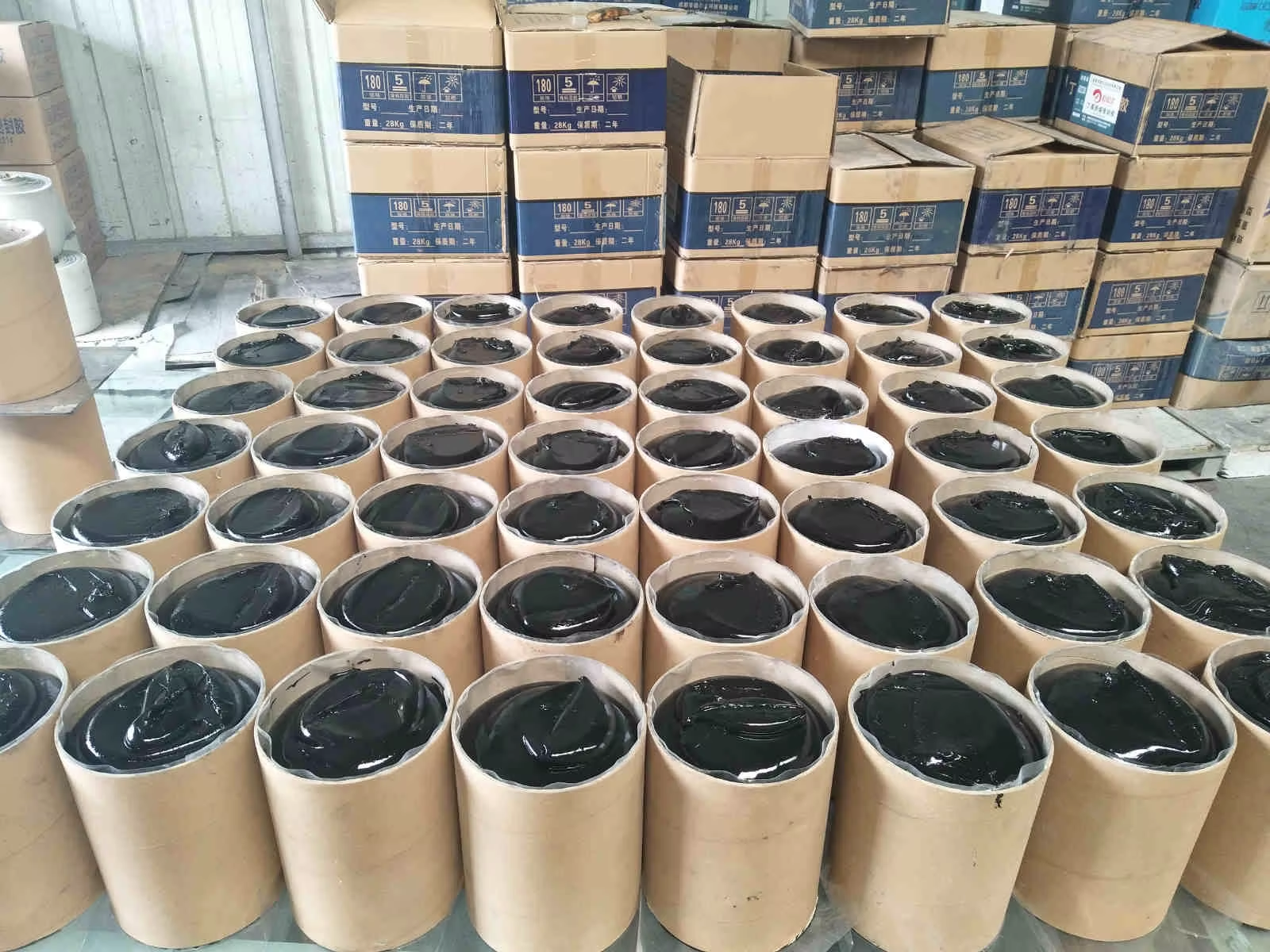
The primary seal is applied on the cavity side of the edge, normally as a thin layer on the spacer face before the spacer is placed against the glass. Its defining job is to restrict moisture vapour transmission into the sealed space, which is what protects the desiccant and keeps the cavity dew point low. It also has to bond to two different surfaces at once: glass on one side and the spacer material on the other.
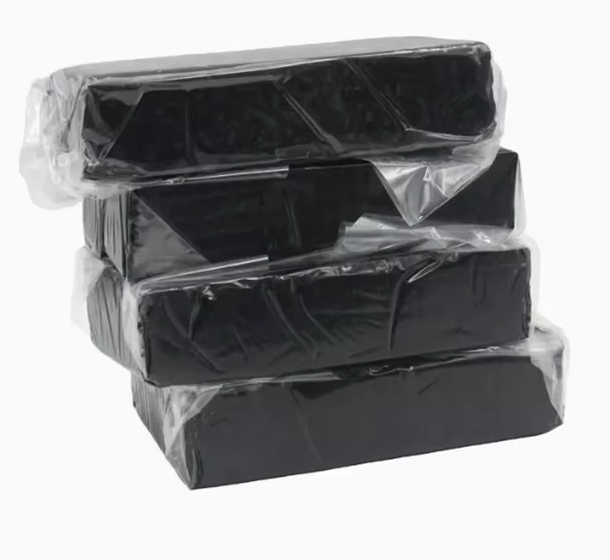
Butyl-based materials are widely used in this position because they combine low vapour transmission with permanent tack. In the Soleron Insulating Glass Materials range, the sealant types listed are butyl sealant, hot melt sealant and two-component silicone sealant, and butyl tape is listed separately among the accessories alongside cork pads and trimming cotton. Butyl tape is the form most often seen on a spacer before assembly: the tape runs along the spacer face, and the spacer is then laid onto the glass.
Because the primary seal sits between two materials, compatibility is a specification question rather than a detail. The spacer face may be aluminium, stainless steel, fiberglass or a plastic composite, and one sealant is not automatically the right match for all of them. The range's stated properties — sealing performance against air and moisture, adhesion to glass and aluminium, weather resistance, and stability from batch to batch — describe the range as a whole; they do not remove the need to confirm the match for a specific spacer and a specific line.
The secondary seal: what it does and where it sits
The secondary seal fills the outer channel of the edge, behind the spacer and over the primary seal. Its job is structural: it bonds the panes and the spacer frame into one unit, transfers loads around the perimeter, and shields the primary seal from mechanical damage and direct weather exposure. In the dual-seal structure described by ASTM C1249-18 and by Cardinal, that secondary layer is silicone.
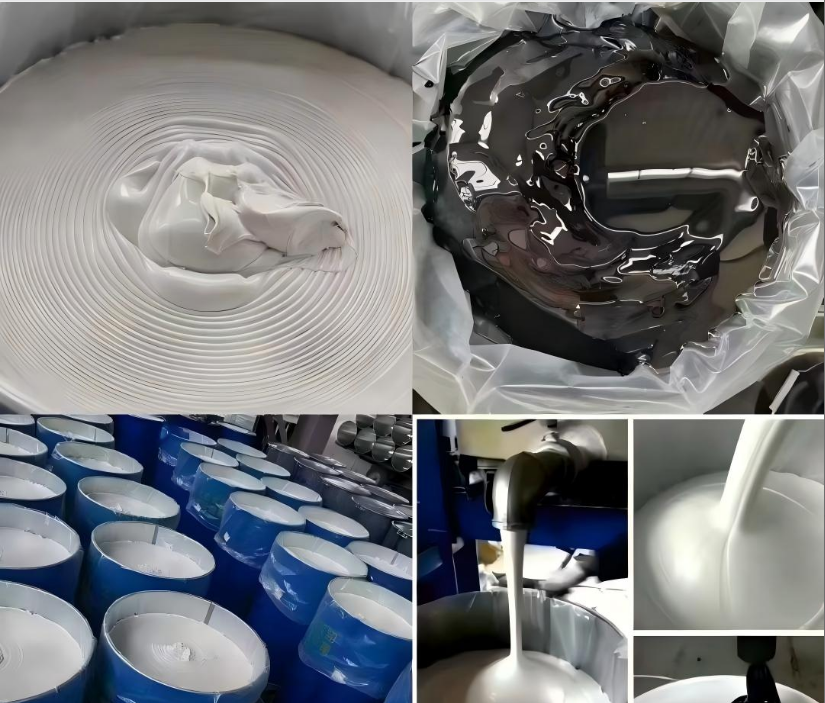
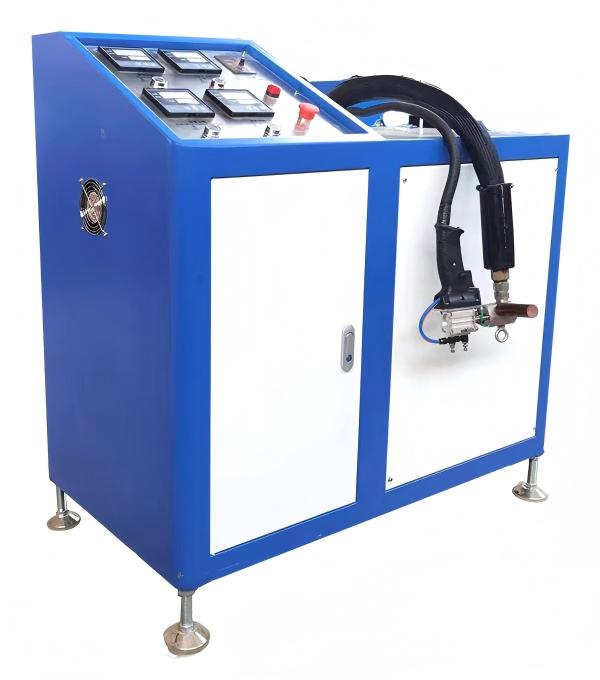
Two-component silicone sealant is the secondary-seal type named in the Soleron range. A two-component product is supplied as two components that are metered and mixed at the point of application, so the dosing and mixing behaviour of the sealant machine becomes part of the seal's performance rather than a background detail. That is why the machine module and the sealant are specified together rather than purchased as unrelated items.
The secondary seal is also where the visible finish of the unit is set. Bead geometry, trimming and cleanliness are checked on the finished unit, and trimming cotton appears among the accessories listed for IGU production at exactly this stage.
Primary vs secondary seal at a glance
The two layers differ on every dimension that matters to an assembler or a buyer: where they sit, what they are asked to resist, how they are applied, and what goes wrong when they are inadequate.
| Aspect | Primary seal | Secondary seal |
|---|---|---|
| Position | Cavity side of the edge, on the spacer face between spacer and glass | Outer perimeter channel, behind the spacer and over the primary seal |
| Main function | Barrier against water vapour entering the sealed cavity; protects desiccant performance | Structural bond holding panes and spacer frame; shields the primary seal |
| Material forms in the Soleron range | Butyl sealant, hot melt sealant; butyl tape is listed separately with the accessories | Two-component silicone sealant |
| Applied by | Butyl sealant extruder machine, butyl sealant coating machine or hot-melt adhesive machine; tape is run onto the spacer before assembly | Two-component sealant machine, which meters and mixes the two components |
| Bonding surfaces | Glass on one side, spacer face on the other | Glass to glass around the perimeter channel, enclosing the spacer frame |
| If inadequate | More vapour reaches the desiccant, so condensation and fogging risk inside the cavity rises over time | Edge integrity under load and movement is reduced, and the primary seal is left less protected |
| What to check | Compatibility with the actual spacer material; applied thickness and continuity | Component ratio and mixing; bead geometry, cure and trimming |
The sealant types named in the Soleron range
Soleron Insulating Glass Materials is the insulating glass materials range of Soleron Building Materials (Hebei) Co., Ltd., a manufacturer based in the Beizhangcun Industrial Zone, Renqiu City, Hebei Province, China. Its product list covers spacer bars, warm edge spacers, sealants, molecular sieve desiccant, corner connectors, Georgian bars, accessories and IGU processing machinery.
The sealant range covers models SOL-803 and SOL-717 and names three types: butyl sealant, hot melt sealant and two-component silicone sealant. Shared range data lists black and white colours; carton box, plastic drum and iron bucket packaging; weights of 28 kg, 30 kg and 330 kg; butyl rubber, silicone polymer and EVA among the materials; and a stated 10-year quality guarantee. The range data does not assign a fixed position in the build-up to each type, and neither does this article — which sealant goes where is decided by the unit's design and by the line configuration.
| Sealant type | Position in a dual-seal build-up | Packaging listed | Stated quality guarantee |
|---|---|---|---|
| Butyl sealant | Cavity side, as the primary vapour barrier; also supplied in tape form for spacer application | Carton box, plastic drum, iron bucket | 10 years |
| Hot melt sealant | Cavity side, applied in molten form by the hot-melt adhesive machine | Carton box, plastic drum, iron bucket | 10 years |
| Two-component silicone sealant | Outer channel, as the structural secondary seal | Carton box, plastic drum, iron bucket | 10 years |
Models SOL-803 and SOL-717 cover the sealant range; listed colours are black and white, listed weights 28 kg, 30 kg and 330 kg, and listed materials butyl rubber, silicone polymer and EVA. Position descriptions reflect the conventional dual-seal arrangement and do not restrict any type to one position.
Step by step: how the two seals are applied during IGU assembly
The sequence below is the general order used in IGU assembly. The equipment modules named are those listed in the Soleron SOL-2 insulating glass processing line range, which covers an insulating glass production line, glass washing machine, two-component sealant machine, butyl sealant extruder machine, aluminium spacer bar bending machine and molecular sieve filling machine, with a power supply of 220V–380V, 50Hz and a power range of 3.2 kW to 38 kW.
- Spacer frame preparation. Aluminium spacer bar (5.5–50 mm, 0.16–0.35 mm thickness) or warm edge spacer (6–27A) is cut and bent on the spacer bar bending machine, then closed with corner connectors (5.5–50 mm). Frame squareness and joint tightness set the geometry the sealants will follow.
- Desiccant filling. 3A molecular sieve in 0.5–0.9 mm, 1.0–1.5 mm or 1.5–2.0 mm grades is filled into the spacer channel on the molecular sieve filling machine. The product data lists 25 kg net weight, vacuum and carton packing, and a 5-year guarantee.
- Primary seal application. The primary seal is applied at this stage — either as butyl tape run along the spacer face, or as extruded butyl from the butyl sealant extruder machine or coating machine, or as hot melt sealant from the hot-melt adhesive machine. The spacer is then positioned on the first glass pane.
- Panel assembly and pressing. The second pane is placed, the unit is squared, and the assembly is pressed so that the primary seal wets out against both glass and spacer.
- Secondary seal application. The unit moves to the two-component sealant machine, which meters and mixes the two-component sealant and fills the outer perimeter channel. On a line built from these modules, the sealant stations are separate: the butyl and hot-melt modules serve the cavity side, and the two-component machine serves the outer channel.
- Trim, cure and inspect. Excess sealant is trimmed with trimming cotton, the unit is left to cure, and the bead is checked for continuity and geometry. The working condition listed for IGU production is clean, dry, controlled temperature and controlled humidity, which applies to storage of the finished unit as much as to assembly.
Where the primary and secondary distinction changes a decision
- Structural silicone glazing and curtain wall. This is the case where the sealant pairing is written into the specification. ASTM C1249-18 describes the polyisobutylene primary plus silicone secondary dual seal as the composition with the durability required for SSG, so a proposal that treats the two layers as one generic sealant is worth questioning.
- Windows and doors in residential, commercial, hotel, office and public buildings. Here the secondary seal carries most of the mechanical duty, but the primary seal still governs how long the desiccant stays effective — the difference shows up years later as fogging rather than as an immediate defect.
- Triple glazing and energy-efficient buildings. More cavities and, often, gas filling mean more edge length and more sealing interfaces; the vapour barrier has to be continuous on every cavity.
- Condensation-prone facades. When the edge runs cold, the moisture balance at the edge becomes the limiting factor, and primary seal performance plus desiccant grade carry more weight than appearance.
- Renovation and replacement units. Matching the existing build-up matters, because a different secondary chemistry can change how the unit behaves in an existing frame and glazing system.
What to verify before you specify a two-seal build-up
- Ask for the edge build-up drawing and confirm which sealant is primary and which is secondary, by product type and model.
- Confirm sealant compatibility with the actual spacer: aluminium 3003 or 1100 coil, stainless steel composite, fiberglass or plastic warm edge, or a butyl sealing spacer.
- Check that the desiccant grade and fill match the cavity depth, and that the sieve grade is stated rather than implied.
- Ask for unit-level test evidence relevant to your market, not only sealant data sheets — EN 1279-2 in Europe, AS/NZS 4666 in Australia and New Zealand, and the applicable ASTM reference where SSG is involved.
- Read the guarantee as a term, not a performance claim. The sealant range states a 10-year quality guarantee; spacer bars, warm edge spacers, molecular sieve and connectors each state 5 years.
- Confirm that the production line has the modules for both seals — a butyl or hot-melt station for the primary and a two-component sealant machine for the secondary.
- Check packaging and unit weights (28 kg, 30 kg, 330 kg for sealants; 25 kg net for molecular sieve) against your handling and dosing equipment.
Frequently asked questions
What is the difference between a primary and a secondary seal in an insulating glass unit?
The primary seal is the inner layer applied next to the spacer on the cavity side; its main job is to limit water vapour transmission into the sealed space and protect the desiccant. The secondary seal is the outer layer applied behind it around the perimeter; its main job is the structural bond that holds the panes and spacer frame together while shielding the primary seal. They use different materials — typically a butyl-based sealant for the primary and a curing sealant such as two-component silicone for the secondary — and they are applied at different stations.
Does the two-seal structure have to meet a standard?
The unit is assessed as a system rather than the sealant alone. EN 1279-2 sets a moisture penetration test with an average index Iav of 0.20 or less across five aged specimens and 0.25 or less for any individual specimen. AS/NZS 4666:2012 covers long-term type testing, glazing, periodic manufacturing testing, traceability, desiccant suitability and shelf life. ASTM C1249-18 describes the polyisobutylene primary and silicone secondary dual seal in the context of structural silicone glazing. A sealant data sheet does not demonstrate conformity by itself; ask for the unit-level evidence that applies to your market.
Which sealant types are available for IGU primary and secondary sealing?
The Soleron sealant range, models SOL-803 and SOL-717, names butyl sealant, hot melt sealant and two-component silicone sealant, in black and white, with carton box, plastic drum and iron bucket packaging, listed weights of 28 kg, 30 kg and 330 kg, and a stated 10-year quality guarantee. Butyl tape is listed separately with the accessories. The range data does not rank these types or fix each one to a single position; the build-up drawing decides which type is used where.
How are the two seals applied on an IGU production line?
The spacer frame is bent and filled with 3A molecular sieve on a filling machine. The primary seal follows — as butyl tape on the spacer face, or as extruded butyl from a butyl sealant extruder or coating machine, or as hot melt sealant from a hot-melt adhesive machine — after which the spacer is laid onto the glass and the unit is assembled and pressed. The secondary seal is then metered, mixed and applied by the two-component sealant machine. All of these modules are listed in the SOL-2 processing line range, specified at 220V–380V, 50Hz with a 3.2 kW to 38 kW power range.
What should buyers compare among China insulating glass materials suppliers?
Compare range completeness, compatibility data and documentation rather than price alone. One sourcing location is the Hebei cluster around Renqiu, where Soleron Building Materials (Hebei) Co., Ltd. is based; the company reports 10 automatic aluminium spacer bar production lines and 10 warm edge spacer production lines, an export share of 80%, and markets including Europe, North America, Asia, the Middle East, Latin America and Africa. Practical checks are whether the supplier names the sealant type and model, spacer sizes, desiccant grade and guarantee period; whether it can support the matching machine modules; and whether it provides unit-level test documentation rather than brochures only. The catalog can be downloaded from the link below for a full list of the range.
Conclusion
The primary and secondary seals are not two versions of the same component. One controls moisture at the cavity boundary; the other carries the mechanical duty and protects the first. That division explains why dual-seal construction appears in glazing standards, why sealant selection is tied to the spacer and to the line, and why a sealant should be evaluated by position rather than by a general performance claim. Butyl sealant, hot melt sealant and two-component silicone sealant each occupy a defined place in that system, and the build-up drawing — not a ranking — is what assigns them.
Next step. If you are specifying an edge build-up, the Soleron Insulating Glass Materials product catalog lists the spacer, sealant, desiccant, connector and processing-line ranges together with stated models, sizes, packaging and guarantee periods: download the Soleron product catalog (PDF). Sample requests and quotations can be raised against a specific build-up so that the primary and secondary sealant are quoted as a matched pair.
Have Questions or Need More Details?
Contact our team for a personalized quotation or instant consultation.
Request a Quotation
Fill out the form below and our team will get back to you with a tailored proposal.
WhatsApp Direct Chat
Prefer to chat in real-time? Message us on WhatsApp for instant assistance & quick answers.
- Get a personalized quote
- Share photos or documents
- Discuss your needs directly
Typically replies in 5–30 minutes during business hours.