
Georgian Bar Materials Compared: Aluminum vs ABS vs Recyclable Plastics for IGU Decoration
A Georgian bar is the decorative bar that reproduces the look of traditional divided-light windows on units built with sealed glass. It is chosen by appearance, but it is bought by numbers: width, wall thickness, length, colour and connector family. When one of those is missing from the enquiry, the bar arrives in the right colour and wrong in almost everything else.
This guide compares the three materials published for the Georgian bar range from Soleron Insulating Glass Materials — aluminium, ABS and recyclable plastics — against the sizes and options that actually appear in orders: 5*8, 6*8, 7*7, 6*15, 8*18 and 8*26, at 0.5 mm and 0.7 mm thickness, in 3 m or custom lengths, and in black, gold, white or customised colour. It also draws a clear line between the decorative bar and the spacer bar, because the two are routinely mixed up in requests for quotation.
Georgian bar range at a glance
- Materials: aluminium, ABS, recyclable plastics
- Widths: 5*8, 6*8, 7*7, 6*15, 8*18, 8*26 and other sizes
- Thickness: 0.5 mm and 0.7 mm
- Length: 3 m standard, or customized
- Colour: black, gold, white or customized
- Packing and guarantee: carton box; 5-year quality guarantee
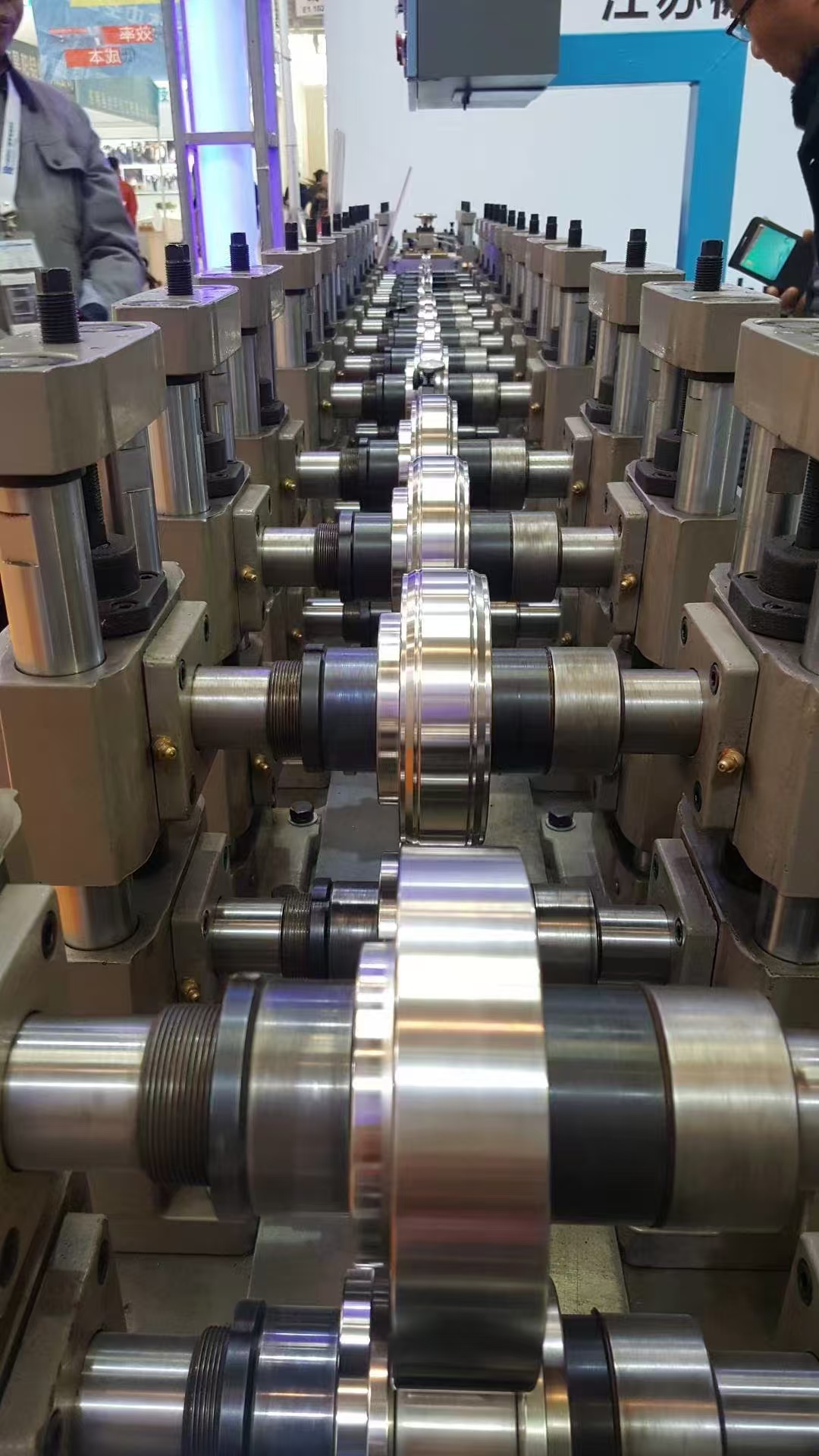
The Problem: Georgian Bars Are Chosen by Eye and Specified by Nothing
Most Georgian bar problems are specification problems, not product problems. The grid is designed, the colour is approved by looking at a photo, and the purchase order then says something close to "Georgian bar, black". Four details are usually missing, and each one carries its own cost.
- Width. The range is published as 5*8, 6*8, 7*7, 6*15, 8*18 and 8*26, among other sizes. A grid drawn for one width cannot simply accept another — the bar depth and the visible face both change, so the drawing has to change with it.
- Thickness. Both 0.5 mm and 0.7 mm are published for this range. They are separate line items, not preferences, and switching between them after the order is placed is a specification change.
- Length. 3 m is the standard length. Custom lengths are available, and they change cutting waste, joint count and freight volume at the same time.
- Connector. A Georgian bar grid is assembled with a connector family that includes the plastic corner connector, the steel straight connector, the Georgian bar connector and end caps, supplied in recyclable plastics from 5.5 mm to 50 mm. Bar and connector are ordered together or not at all.
Why the decorative bar keeps getting confused with the spacer bar
The spacer bar holds the glass panes at a fixed distance from each other and establishes the size of the interpane space. It carries the thermal duty of the edge. Published spacer comparison data places aluminium spacers in the 160–200 W/mK range against 0.13–0.25 W/mK for warm edge spacers, and notes that warm edge technology reduces thermal bridging by up to 90% compared with aluminium. A decorative Georgian bar does none of that work — it is a visual component that lives in the same window assembly.
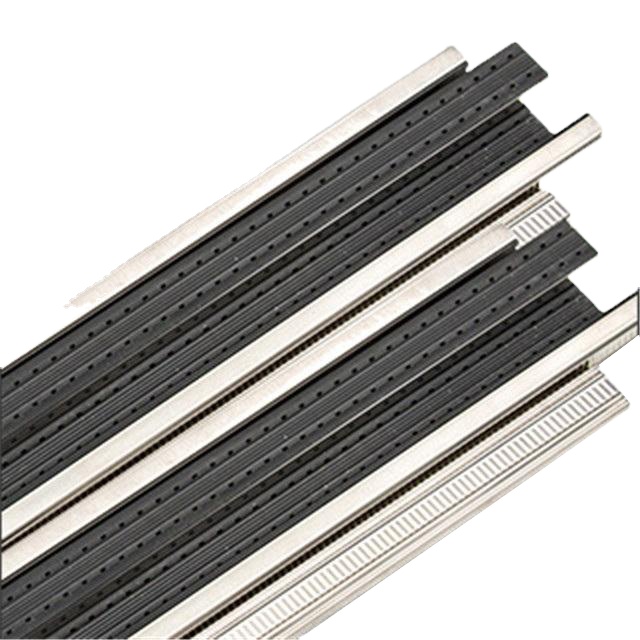
Mixing the two in an RFQ has a predictable result: the buyer receives a quotation for the wrong component family, or a genuine warm edge upgrade is quoted as an inexpensive decorative accessory. Either way the comparison that follows is meaningless.
Industry Background: Decorative Demand Moves With Sealed Unit Volume
Decorative bars are sold into the same fabrication chain as spacers, sealants and desiccants, so the demand signal comes from sealed unit production rather than from the decorative bar category itself. Grand View Research reported the global insulated glass market at USD 92.7 billion in 2024, projected at USD 101.3 billion in 2026 and USD 121.7 billion by 2030. These figures are source-reported commercial research and are not independently verified.
The performance end of the same chain is growing more visibly. Meticulous Research valued the warm edge spacer market at USD 1.1 billion in 2024, with a projected figure of around USD 1.90 billion by 2035 — a signal that fabricators are being pushed toward higher-performance edge systems. Decorative bars follow that volume, but it is worth being precise: the sources reviewed for this guide do not provide a separate material-level market size for decorative or Georgian bars. Anyone quoting a decorative bar market figure should be able to name the source behind it.
Standards set the envelope; documentation proves the component
The standards that govern sealed units are specific and testable. EN 1279-2 sets a moisture penetration requirement of an average index of 0.20 or lower across five aged specimens, with no individual specimen above 0.25, and it recognises four desiccant moisture measurement methods: 540 °C drying, Karl Fischer titration, gravimetric and dew-point methods. AS/NZS 4666:2012 covers long-term type testing, glazing, periodic manufacturing testing, traceability, desiccant suitability, shelf life and desiccant exposure limits. ASTM C1249-18 describes a dual-seal structure — polyisobutylene as the primary seal and silicone as the secondary seal — as the composition with the required durability for structural silicone glazing.
A Georgian bar is not the edge seal, so it is not the component these tests measure. The practical consequence for a buyer is a documentation habit: check exactly which component scope each document covers before it is filed against a project. A certificate that names spacer profiles does not automatically apply to a decorative bar, and an SDS issued for a connector does not automatically cover every item in the same range.
Material Option 1: Aluminium Georgian Bars
Aluminium is one of the three materials published for this Georgian bar range. In the range it shares a single published specification: widths of 5*8, 6*8, 7*7, 6*15, 8*18, 8*26 and other sizes; a thickness choice of 0.5 mm or 0.7 mm; a standard 3 m length with custom lengths available; colour options of black, gold, white or customized; carton box packing; and a 5-year quality guarantee.
Buyers select aluminium when the grid is meant to read as a crisp metallic line. Black and gold are the classic finishes for traditional divided-light patterns, and a metal profile keeps that edge definition stable across a long run of bars. The bar is produced in the same manufacturing environment as the company's aluminium and warm edge spacer lines — Soleron Building Materials (Hebei) Co., Ltd. operates 10 automatic aluminium spacer bar production lines and 10 warm edge spacer production lines — which is a supply-rhythm fact rather than a performance claim about the bar itself.
What to confirm on an aluminium Georgian bar order
- Confirm which widths in the 5*8 to 8*26 list are held in aluminium for the required batch, rather than assuming the whole list is available in every material at all times.
- State 0.5 mm or 0.7 mm explicitly. The two are separate specifications and should not be treated as interchangeable.
- Check the thermal logic of the whole assembly. Aluminium is a conductive metal, so if the grid geometry creates a thermal path in a high-performance unit, the lever is the spacer choice — warm edge rather than aluminium — and published spacer data puts the reduction in thermal bridging at up to 90%.
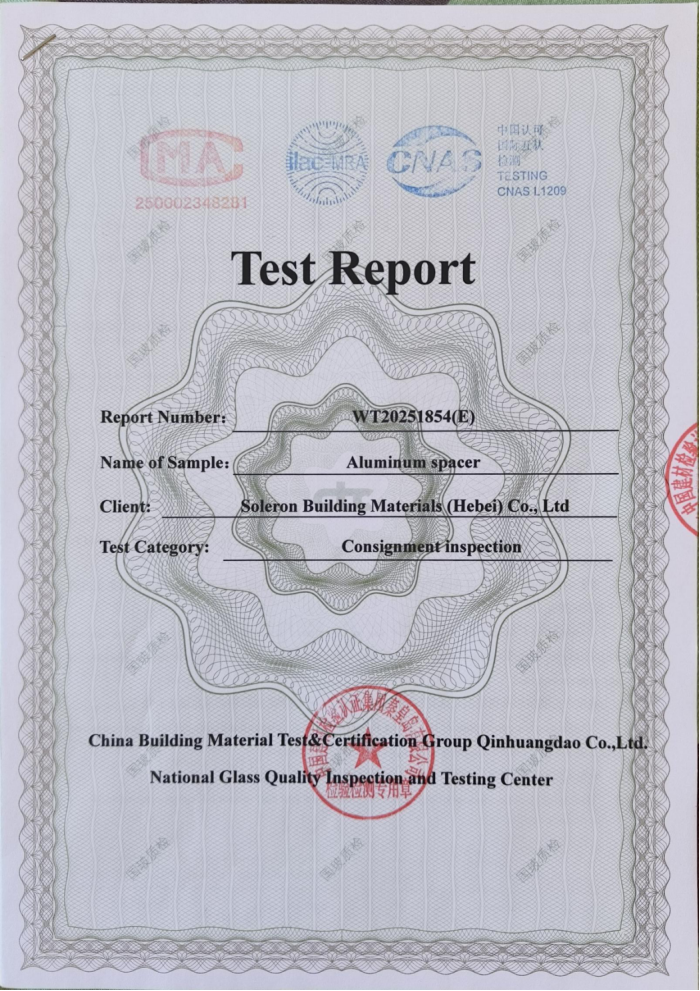
- Ask for the document that matches the exact component. The supplier record holds test report WT20251854(E), issued 2025-11-21 against JC/T 2069-2011, covering aluminium spacer profiles. That document does not cover decorative bars, and it should not be presented as if it does.
Material Option 2: ABS Georgian Bars
ABS is listed alongside aluminium and recyclable plastics as a material option for this Georgian bar range. It is a thermoplastic, so the finished bar is a polymer profile rather than a metal one — a different material class sharing the same published size, thickness, length and colour list.
That shared list is the single most useful thing to understand about ABS in this range. The published Georgian bar specification does not split widths, thickness, colours or lengths by material. In practice, buyers should treat 5*8 through 8*26, 0.5 mm and 0.7 mm, 3 m or custom lengths and the black, gold, white or customized colour list as the reference points, then confirm which of those are held in ABS for the specific order. That one confirmation step prevents the most common ABS problem in the field: a width or colour that exists somewhere in the range but not in the required material for the required delivery date.
When ABS is the practical choice
- Non-metallic appearance. Where the frame and the grid are both polymer-finished, an ABS bar keeps the finish family consistent across the whole window.
- Handling weight. As a general material property, a polymer profile is lighter to handle than a metal profile of the same width — useful where assembly staff handle long bars repeatedly.
- Consistency rule. Keep the material identical across a project. Mixing aluminium and ABS bars in the same visible grid is a specification error that shows up in daylight.
One caution on terminology: ABS and "recyclable plastics" are both named in the material field of this range, but they are not automatically the same statement. Buyers with recycling, end-of-life or waste-reporting requirements should ask which description applies to the exact item ordered, in writing, rather than carrying an assumption across a whole project.
Material Option 3: Recyclable Plastic Georgian Bars and Matching Connectors
Recyclable plastics are the third published material for the Georgian bar range. The same product record also covers "georgian bar flowers" and "decorative bar" as product types, so the material question applies to the flower and junction pieces as well as to the straight bar — an important detail, because flowers are often specified later than the bars and then ordered in a different material.
The connector family that assembles a Georgian bar grid is also made from recyclable plastics. It includes the plastic corner connector, the steel straight connector, the Georgian bar connector and end caps, supplied in sizes from 5.5 mm to 50 mm, in black, white or customized colour, in bag or box packing, with a 5-year quality guarantee. Ordering the bar and the connector from the same specification sheet is the simplest way to remove the connector mismatch described earlier in this guide.
Documentation that is actually on file for the plastic connector family
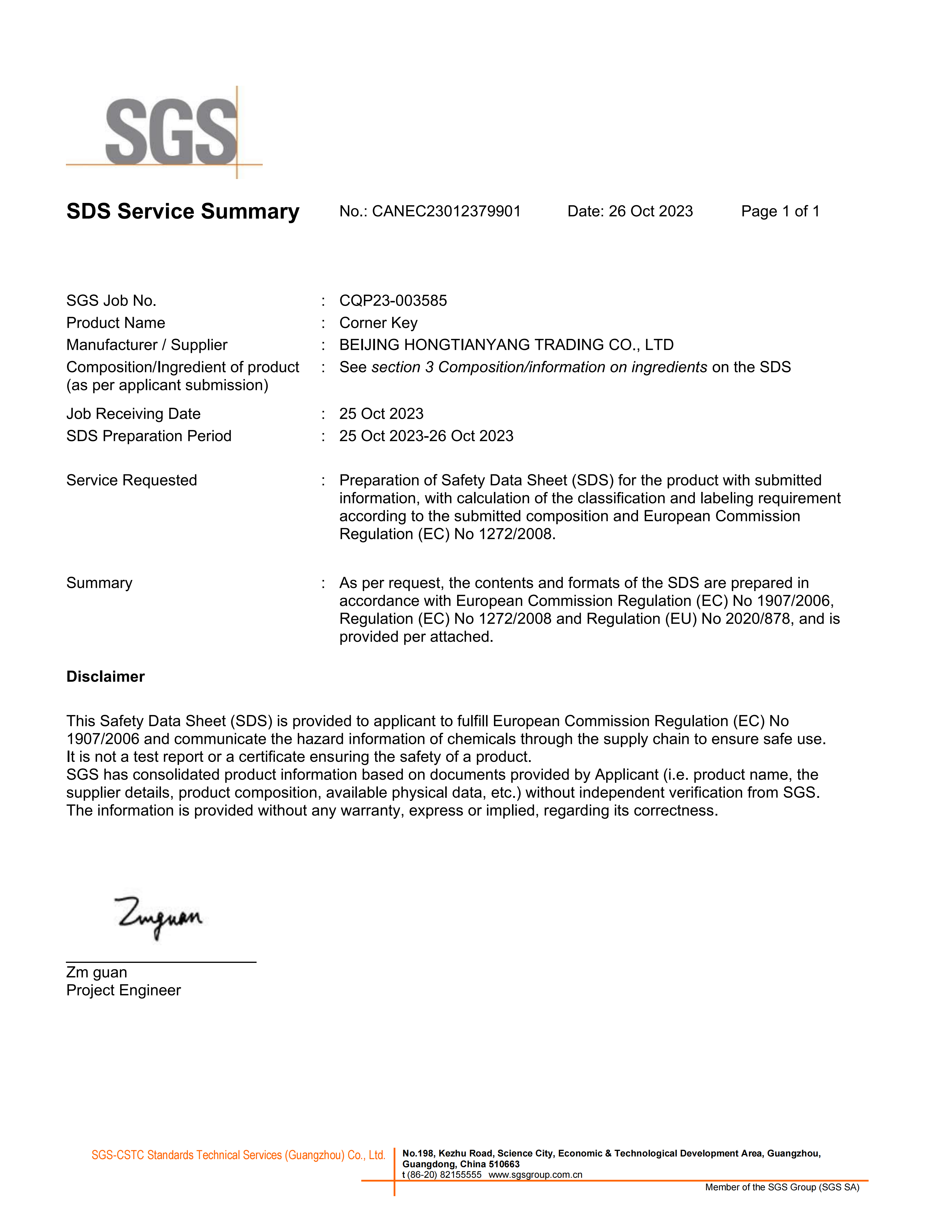
A Safety Data Sheet is held for the connector scope: number CANEC23012379901, issued 2023-10-26 by SGS-CSTC Standards Technical Services (Guangzhou) Co., Ltd., referencing Regulation (EC) No 1907/2006, Regulation (EC) No 1272/2008 and Regulation (EU) No 2020/878. The stated scope is the corner key / corner connector, and the covered markets are the EU, US, Middle East, Africa and Southeast Asia.
Two points should be read carefully from that record. First, an SDS documents material safety and handling, not decorative performance; it should not be presented as a performance rating for a Georgian bar. Second, the scope statement matters — this document covers the corner key / corner connector. Buyers who need material documentation for a decorative bar or a flower should ask for the document that matches that exact component scope.
Georgian Bar Material Comparison Table
| Decision point | Aluminium | ABS | Recyclable plastics |
|---|---|---|---|
| Material class | Metal (aluminium) | Thermoplastic (ABS) | Recyclable plastics |
| Published widths for the range | 5*8, 6*8, 7*7, 6*15, 8*18, 8*26 etc. — confirm availability per material before quoting | ||
| Thickness options | 0.5 mm and 0.7 mm | ||
| Length | 3 m standard, or customized | ||
| Colour | Black, gold, white or customized | ||
| Packing and guarantee | Carton box; 5-year quality guarantee | ||
| Matching connector family | Plastic corner connector, steel straight connector, Georgian bar connector and end caps — recyclable plastics, 5.5–50 mm, black / white / customized, bag or box packing, 5-year quality guarantee | ||
| Related component documentation on file | Test report WT20251854(E) — aluminium spacer profiles, JC/T 2069-2011 | Not stated for ABS items in the record reviewed | SDS CANEC23012379901 — corner key / corner connector, SGS-CSTC, 2023-10-26 |
| Selection logic | Crisp metallic line; black and gold finishes suit classic grids | Non-metallic profile inside the same published size list | Pairs directly with the recyclable-plastic connector family used to assemble Georgian bar grids |
| Confirm before ordering | Which widths are held in the chosen material, whether 0.5 mm or 0.7 mm is required, and that the full project quantity comes from one colour batch | ||
Table notes: range data reflects the published specification for the Georgian bar item (widths, thickness, length, colour, packing, guarantee) and for the connector item (5.5–50 mm, recyclable plastics, packing, guarantee). Documentation rows state the exact scope of each document; the aluminium spacer test report does not cover decorative bars, and the SDS covers the corner key / corner connector scope.
Sizes and Length: Standard 3 m Against Custom Lengths
Width is the first number a buyer should fix, because it drives the visible face of the bar and the depth that must sit inside the grid. The published list covers 5*8, 6*8, 7*7, 6*15, 8*18 and 8*26, among other sizes, which spans the narrow decorative profiles used in residential work through to the wider bars used in larger commercial grids.
Length is the second number, and the choice between standard and custom is a costing decision as much as an engineering one.
| Length option | What it gives you | What it costs you |
|---|---|---|
| Standard 3 m | Simple cutting plan, easier handling and storage, straightforward carton packing and freight calculation | Off-cut waste on short runs; more joints on long continuous spans |
| Customized length | Fewer joints across long runs; less off-cut waste when the grid dimensions are known in advance | Requires a production slot — the manufacturer's stated lead time is 20–45 days, so a custom cut belongs in the project schedule, not in an off-the-shelf assumption |
A practical rule from the range itself: use the standard 3 m length where the grid repeats and the cutting plan is simple, and move to a custom length where the project has long, continuous runs or a fixed waste target that has to be met.
Thickness: 0.5 mm or 0.7 mm
Both thicknesses are published for the Georgian bar range, and both are normally available in the same materials. The choice is usually made on three factors, and none of them is cosmetic.
- Rigidity. As a general engineering principle, a thicker wall increases rigidity in the same profile width. Where the grid has longer unsupported spans, this is the factor that decides the specification.
- Weight. A thinner wall reduces material weight across a large bar count, which matters for handling and for freight on volume orders.
- Connector grip. The connector family must match the profile. Because the connector range spans 5.5 mm to 50 mm, the bar and connector should be quoted together so the pairing is verified before production.
Whichever is chosen, the thickness should be written on the purchase order and held constant across the project. A mid-project switch between 0.5 mm and 0.7 mm is a new specification, not a substitution.
Colour: Black, Gold, White or Customized
The published colour options for this range are black, gold, white or customized. Colour is where an IGU decoration project is won or lost visually, so it deserves two decisions rather than one.
The first decision is design intent: black reads as a defined, drawn line against light frames and glass; gold matches period and traditional styling where a metallic accent is expected; white blends into white or light frames and keeps the grid understated. Where the project has a specific architectural finish, the customized route keeps the bar in the same colour family as the window profile.
The second decision is batch consistency. Because colour is judged on the installed grid, and because a facade is seen with many bars side by side, the whole project quantity should come from one confirmed colour batch. Confirming the colour on a physical sample before mass production is the cheapest control available at this stage — ahead of cutting, packing and shipping.
Step-by-Step: How to Specify a Georgian Bar Order
- Fix the grid drawing first. Count the vertical and horizontal runs, and note where flower pieces are required. Width cannot be chosen sensibly until the drawing exists.
- Write the material on the line item. Aluminium, ABS or recyclable plastics — named explicitly, not implied by a photo.
- Select the width from the published list: 5*8, 6*8, 7*7, 6*15, 8*18, 8*26 or another size confirmed by the supplier.
- Select the thickness: 0.5 mm or 0.7 mm, stated as a specification.
- Select the length: standard 3 m, or a customized length with the cutting plan attached.
- Select the colour: black, gold, white or customized, confirmed on a sample before the production batch.
- Match the connector family and confirm commercial terms. Order the Georgian bar connector, plastic corner connector, steel straight connector and end caps with the bars; MOQ starts at 5 cartons; lead time is 20–45 days; OEM/ODM is available for logo, size and packaging; quality control is carried out by random inspection; and after-sales support is provided remotely.
Use Cases
Residential window replacement with a traditional look
Replacement windows in established housing stock usually need a divided-light appearance on a modern sealed unit. A 6*15 or 8*18 bar in white or gold, in aluminium or ABS, keeps the grid proportionate to the opening, while the 3 m standard length keeps the cutting plan simple across a run of similar windows.
Renovation of period-style facades
Where a facade has to keep its original geometry, the flower pieces matter as much as the bars. Specifying bars, flowers and connectors in one material — recyclable plastics or aluminium — and confirming the colour against the existing joinery avoids the mismatch that appears when pieces are ordered at different times.
Distributor and stockist programmes
For distributors and glass accessories distributors, the practical unit of supply is the carton, not the piece. The published terms support that model: carton box packing, a 5-year quality guarantee, MOQ from 5 cartons and an export footprint that includes the EU, Middle East and Southeast Asia. On the spacer side of the same supply programme, the manufacturer keeps more than 100 pieces of regular aluminium spacer bars and warm-edge spacers in stock, which supports replenishment alongside decorative bar orders.
IGU processors running a warm edge system
Where a fabricator has standardised on a warm edge spacer, the decorative bar is a separate decision inside the same unit. Keeping the two decisions separate — documenting the spacer, the sealant and the desiccant on one side, and the decorative bar, its thickness and its connector on the other — keeps the specification clean when the unit is quoted to the end customer.
Frequently Asked Questions
Are Georgian bars covered by the same standards as the sealed unit?
No. Standards such as EN 1279-2 measure the sealed unit — its moisture penetration requirement is an average index of 0.20 or below across five aged specimens, with no individual specimen above 0.25 — and AS/NZS 4666:2012 covers long-term type testing, periodic manufacturing testing, traceability, desiccant suitability, shelf life and desiccant exposure limits. A decorative Georgian bar is not the edge seal, so it is not the component those tests assess. What a buyer should verify instead is the documentation that matches the exact component ordered. For the recyclable plastic connector family, an SDS is on file: number CANEC23012379901, issued 2023-10-26 by SGS-CSTC Standards Technical Services (Guangzhou) Co., Ltd., covering the corner key / corner connector scope and referencing Regulation (EC) No 1907/2006, Regulation (EC) No 1272/2008 and Regulation (EU) No 2020/878.
Which sizes, thicknesses, lengths and colours can be supplied in this Georgian bar range?
The published range covers widths of 5*8, 6*8, 7*7, 6*15, 8*18 and 8*26 among other sizes, thicknesses of 0.5 mm and 0.7 mm, a standard 3 m length with customized lengths available, and colours of black, gold, white or customized. The bar types covered include Georgian bars, Georgian bar flowers and decorative bars, and the material options are aluminium, ABS and recyclable plastics. Because the published list is not split by material, availability of a specific width, thickness or colour in the chosen material should be confirmed at the quotation stage.
What is the minimum order and what does the commercial schedule look like?
MOQ starts at 5 cartons. The stated lead time is 20–45 days. OEM/ODM production is offered with customization across logo, size and packaging, and quality control is applied by random inspection. The Georgian bar and connector items both carry a 5-year quality guarantee, and the connector family is supplied in bag or box packing. Pricing is quoted per project, so a quotation should reference the material, width, thickness, length, colour and connector count rather than a single product name.
Can a sample be requested before committing to a full order?
A sample request is the right first step for any decorative grid, because colour and profile are judged visually and a specification sheet cannot settle that question. The recommended sequence is to confirm the material, width and thickness first, then request a sample of the bar and connector together so the pairing can be checked by hand, and only then release the production quantity. The full product catalog is available for download at the Soleron product catalog PDF, and sample or quotation requests can be raised through the contact details listed at the end of this article.
How should buyers shortlist suppliers for Georgian bars and aluminium spacer bars for double glazing?
Build the shortlist on documented scope rather than on catalogue breadth. A workable check has four parts: confirm that the supplier's product record names the materials actually required (aluminium, ABS and recyclable plastics for Georgian bars); confirm the published width, thickness, length and colour list for each material; confirm that the connector family — Georgian bar connector, plastic corner connector, steel straight connector and end caps — is quoted from the same specification; and confirm which documents are on file and what each one actually covers, such as SDS CANEC23012379901 for the corner key / corner connector and test report WT20251854(E) for aluminium spacer profiles.
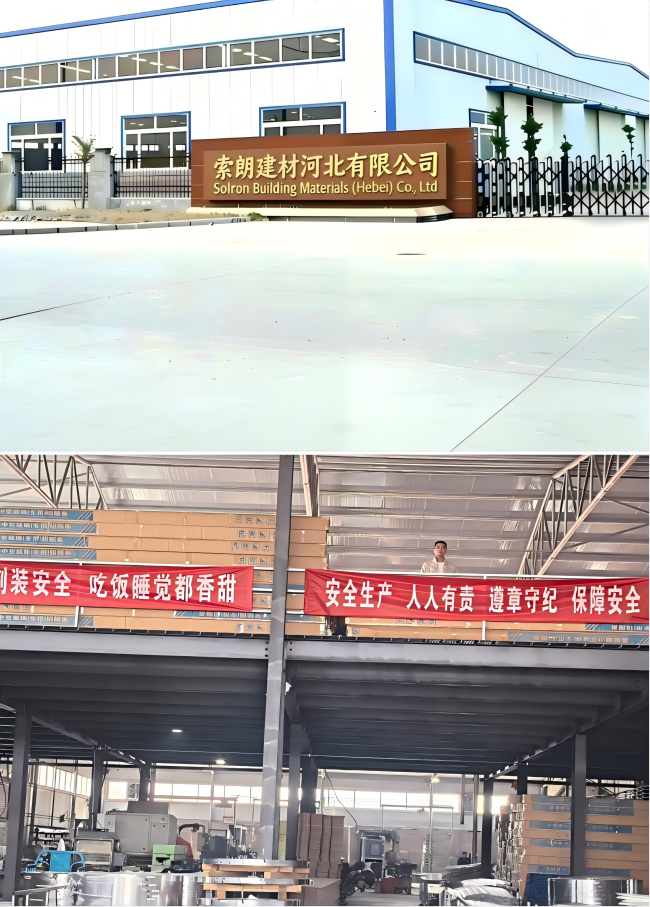
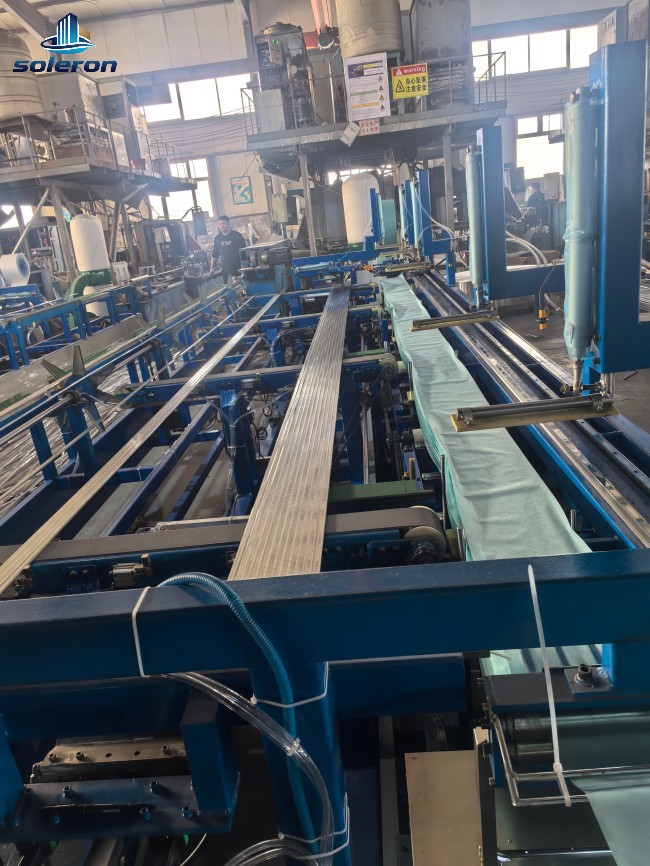
Soleron Building Materials (Hebei) Co., Ltd. is one manufacturer operating in this category. The company operates 10 automatic aluminium spacer bar production lines and 10 warm edge spacer production lines, keeps more than 100 pieces of regular aluminium spacer bars and warm-edge spacers in stock, and exports to the EU, Middle East and Southeast Asia. Its products are used by insulating glass manufacturers, windows and doors manufacturers and glass accessories distributors, and its documented case record covers 500 tons of spacer bars supplied across 33 countries in the Middle East, Asia, Europe, Africa and the Americas.
Conclusion: Choose the Material Once, Write the Spec Every Time
The material decision in this range is simpler than it first appears. Aluminium gives a crisp metallic line and suits black and gold classic grids. ABS gives a non-metallic profile inside the same published size list. Recyclable plastics pair directly with the connector family that assembles the grid, and carry the SDS documentation that is on file for that connector scope. All three share one published specification: widths from 5*8 to 8*26, thicknesses of 0.5 mm and 0.7 mm, 3 m or custom lengths, black, gold, white or customized colour, carton box packing and a 5-year quality guarantee.
The risk sits in the specification, not in the material. Write the material, width, thickness, length, colour and connector count on the order; keep the decorative bar decision separate from the spacer decision; and confirm which document covers which component before it goes into a project file. That discipline is what turns a decorative accessory into a predictable line item on an insulating glass materials purchase.
Next Step: Sample, Quote or Catalog
Send the grid drawing with the material, width, thickness, length and colour you need, and request a sample or a quotation for the Georgian bar and connector together. MOQ starts at 5 cartons and lead time is 20–45 days.
Soleron Insulating Glass Materials
Website: iguglassunit.com
Catalog download: Soleron product catalog (PDF)
Contact: James — soleron.buildingmaterials@gmail.com
Tel / WhatsApp: +86 138-3340-3347
Address: Beizhangcun Industrial Zone, Renqiu City, Hebei Province, China
Have Questions or Need More Details?
Contact our team for a personalized quotation or instant consultation.
Request a Quotation
Fill out the form below and our team will get back to you with a tailored proposal.
WhatsApp Direct Chat
Prefer to chat in real-time? Message us on WhatsApp for instant assistance & quick answers.
- Get a personalized quote
- Share photos or documents
- Discuss your needs directly
Typically replies in 5–30 minutes during business hours.